<$BlogItemControl$>

Tuesday, April 03, 2007


10-pages-in book review: The Calligrapher

I haven't been writing a lot of 10-pages-in book reviews lately simply because I haven't been reading any books worth talking about. In fact, it's been about a month now that in my prime book-reading time (on the bus going home) I've been reading magazines. Or just staring out the window. It's been a horrible drought.

Thank goodness, the drought has been quenched (that seems a little hyberbolic, but I've written myself into a corner barely five sentences in - that can't be good) with this latest book. I received it as a gift from the commenter otherwise known as Trixie, who really needs her own blog. (And again, I'm off track. FOCUS, woman.)

Ahem. So, this book - it's amazing. It's delicious. I can't remember the last time I savoured a book like this - the story, the language, the turns of phrase. It's exquisite and delightful, intelligent and wryly funny. It's called The Calligrapher, and it's a first novel by a British chap named Edward Docx.

The Calligrapher is the story of 29 year old Jasper Jackson of London, told in cheeky and clever first-person narrative. He's a raffish sort of fellow, a sophisticated and self-aware womanizer and serial heartbreaker; a younger, hipper Hugh Grant sort of character. He's a scamp and a scalliwag, just the sort of fellow whom I would find absolutely irresistible in real life - and as a literary creation.

He describes, for example, his preparations for the perfect aprés-amour breakfast when his latest conquest requests strawberries :


Even here, there is danger. The talented amateur, for example, will stride merrily out to the shops on the eve of the assignation and buy everything his forthright imagination can conceive of - muesli, muffins, marmalade, a range of mushrooms, perhaps even some maple syrup. Thus laden, he will return to stuff his shelves, fill his fridge and generally clutter his kitchen with produce. But this will not do. Not only will his unwieldy efforts be noticed by even the most blasé of guests - as he offers first one menu, then another - but, worse, the elegance and effect of seeming to have exactly what she wants is utterly lost, drowned out in a deluge of petits déjeuners.

No, the professional must take a very different approach. He will, of course, have all the same victuals as the amateur, but - and here's the rub - he will have hidden them. All eventualities will have been provided for, and yet it will appear as though he has made provisions for none. Except - magically - the right one.

Anyway, thank fuck I got the strawberries.

Jasper is also a formally trained calligrapher, and he is working on his largest commission to date, transcribing 30 songs and sonnets by the poet John Donne for an American buyer. Each chapter opens with a few lines of the Donne poem Jasper is currently transcribing, which happens to reflect the changing state of Jasper's life.

I must admit to an ignomious lack of awareness about poetry. Poetry is one of those things that I've tried valiantly to 'get', mostly unsuccessfully. About all I know of Donne is that he was a contemporary of Shakespeare, and that he wrote both holy sonnets and erotic love sonnets. In this book, I adore how the narrator uses the little bits of verse to explore how he feels, and also gives a little Poetry 101 lesson by walking the reader through Donne's verse. Donne's poetry is so cleanly woven into the fabric of the story and such a perfect foil for the unfolding storyline that I'm curious as to how the author constructed the novel. Did the author choose the sonnets and then build the story around them?

At just shy of 100 pages into the book, I've just come to a critical point in the story. Jasper, recently caught in flagrante delicto with another woman and turfed by his girlfriend, has become mesmerized by a mysterious woman who appears in the garden courtyard outside his home studio. In his own words, he falls apart as he tries to discern who this perfect beauty is and whether she is available.

I've long been a fan of 'lad lit', and this book seems a particularly worthy example of that genre. In one of the reviews of The Calligrapher I read, I think it was in the NYT, called author Edward Docx the little brother of Nick Horby. I can see that. Docx writes with the same delicious dry wit, but with an extra attention to language and turn of phrase that makes me positively salivate. I also enjoy how each phrase drips with what I can only describe as inherent Britishness - you can't read this prose without hearing the clipped wry British voice in it.

While I'm curious as to the outcome of the story, far from racing to the conclusion I'm content to savour each page as I read it. True, like a lot of first-time novels this one seems to succumb to its own bravado at times. Like Jasper, the book is perhaps a little too aware of its own cleverness on occasion, and the language comes dangerously close to excessive embellishment. But these are minor quibbles, and the literary excesses are actually a large part of this book's charm.

A book is a lovely gift at the best of times, but giving fiction - especially fiction you haven't yet read yourself, as Trixie admitted she hadn't - can be tricky. There are simply so many bad books out there, and so many more that are simply mediocre, that it takes an extraordinary amount of luck to have one so exquisitely enjoyable as this one simply be gifted upon you.

A bad boy who has a way with words. I never stood a chance.

Labels: ,


Wednesday, January 31, 2007


Ten-pages-in book review: Children of Men

This was supposed to be a 10-pages-in book review of PD James' Children of Men. But the book was really good and I accidentally read the whole thing on the train going to and from my conference in Kingston last week before I could write the review. Oops, sorry about that.

I was surprised at what a great book this is. I had heard vaguely of the movie, but my life lately hasn't permitted me a lot of time for cinematic indulgence, and the book and the movie only really tripped onto my radar screen when I read about the Barren Bitches Book Brigade Tour hosted by Stirrup Queens and Sperm Palace Jesters. (Do they know how to write a catchy title or what?)

A bit of a caveat before I begin. (You know it's going to be a long ramble when I'm making preamble-ish caveats in the third paragraph.) I'm not much of a sci-fi reader, and I'm especially not a huge consumer of dystopian fiction. I'm far too optimistic, some might even say simplistic, to submit myself to the fatalistic outlook of dystopia. So I'm not overly familiar or comfortable with the conventions of the genre, outside of what I learned from Margaret Atwood, but as soon as I read the premise of this book, I knew I had to read it and talk about it with you.

Ah yes, the book. It's set in the year 2021, and is told in the alternating first and third person perspective of Theo Fallon, an Oxford professor and historian. The future in which he lives is not so different from the world of 2007, nor the world of 1992 (when the book was written) insomuch as there are no flying cars, no outposts of civilization on the moon, not even any mention of computers that I can recall. But it is the world of a doomed society, because it has been more than 25 years since a baby has been born. In the year 1995, all of humanity has been struck, completely inexplicably, infertile.

The book opens on a note of futulity and fatalism, many years past the panicked shock of the initial realization of infertility. Theo notes in his diary, "We are outraged and demoralized less by the impending end of our species, less even by our inability to prevent it, then by our failure to discover the cause." Their spirits have been defeated not by the 'what', but by the unanswerable 'why?'

I found a lot of resonance with my own struggle with infertility in this book. The last generation of children, born in the year 1995, are known as Omega. As they become adults, society moves to erase the painful reminder that there will be no more children: "The children's playgrounds in our parks have been dismantled. [...] The toys have been burnt, except for the dolls, which have become for some half-demented women a substitute for children. The schools, long closed, have been boarded up or used as centres for adult education. The children's books have been systematically removed from our libraries. Only on tape and records do we hear the voices of children, only on film or television programs do we see the bright, moving images of the young. Some find them unbearable to watch but most feed on them as they would a drug."

I was haunted by this idea, by a world without children. I think I found the concept entirely more chilling than the idea of humanity's ultimate expiration. Theo describes in a few scenes how pets have become substitute children, as in one scene where a kitten is christened in an abandoned church. In another, he alludes to the acrimony of custodial agreements for pets: "As the registered part owner on the fecund-domestic-animal licence, I could, of course, have applied to the Animal Custody Court for joint custody or an access order, but I had no wish to submit myself to the humiliation." (I remember joking back in the dark days, in the tight way one jokes about something that might not be so funny after all, that if we didn't have a baby soon, one might soon find me at the mall pushing our lovely golden-shepherd mix Katie in a pram with a bonnet on her head.)

But the book isn't entirely about infertility; it's more of an exploration of what would happen to humanity deprived of a future and forced to live through a slow and considered extinction. Really, not the most cheerful book I ever read, but fascinating and compelling all the same.

Theo's cousin, Xan, is the Warden of England, a benevolent dictator who gives the people what he thinks they want: protection, comfort, and pleasure. When Theo, who had previously served on Xan's advisory council, is approached by a small group of revolutionaries who want to use Theo as a conduit to his powerful cousin, Theo is reluctant to get involved in anything that might disrupt his ordered life. When he does acquiesce in the end, it is for completely unaltruistic reasons.

The second half of the book becomes, rather unexpectedly after the thoughtful if plodding narrative of the first part of the book, a page-turning adventure that makes me glad I was too far committed to write a review before I reached the end of the story. It's a fascinating, insightful book that left me considering the issues it raises long after I turned the last page. I'd like to go see the movie now, although I've heard that it's only loosely based on the book, if only to have the excuse to re-immerse myself in the story again.

I'm not convinced I've adequately conveyed how much I enjoyed this book, how thought-provoking it was, and how I lingered over the last page, wondering what happened next. I'm typing this late at night, though, and rather than fuss over this and try to get the words just right, I'll just tell you that it's a really great book, one of the best I've read in a long time, and I'd love to talk about it with you.

I'll be revisiting this book next month as part of the Barren Bitches Book Brigade Tour, and you still have time to join in if you're interested. Read the book by the end of February and we can host our own conversation about the book on March 5.

Labels: , ,


Wednesday, January 03, 2007


10-pages-in book review: Blackbird House

I'm about half way through Alice Hoffman's 2004 book Blackbird House. I stumbled across it the other day on the remaindered table at Chapters. Including the tax and my membership discount, I paid a stellar $2.83 - for the hardcover!

Although the price was the first thing that caught my attention (how can I resist a hardcover for less than the price of a magazine?), it was the reviews on the cover that sealed the deal. On the front cover, there's an endorsement by Kate Atkinson. On the back cover, reviews compare Alice Hoffman to two of my favourite Canadian writers, Alice Munro and Carol Shields. As if that weren't enough, there was a mention of magic realism, and I was hooked. Not even one page into the book, and that's all it took.

Blackbird House is an evocative, haunting set of linked short stories about a farm on an isolated cape in Massachusetts. Spanning from 1778 to the present day, they are more vignettes than stories; each one in the same place but centred around a subsequent generation of occupants. The farm, with its murky pond and fields of thistle and rampant sweet peas, becomes a character in itself and we watch it tranform through the ravages of time and occupancy - and tradgedy.

If I ever become a fiction writer, I think my genre of choice would be magic realism. I've always been fascinated by the genre and its casual acceptance of things whimsical and magical. In this book, a boy befriends a blackbird who cannot fly, and the blackbird turns white with loss and fear on the night the boy is lost at sea. Two centuries later, the snowy white bird still flits about the farm. And the colour red runs through the lives of the occupants of Blackbird House - a vibrant, sensous red at odds with the quiet desperation of many of the farm's occupants. There's the red of Ruth Blackbird Hill's boots; the blood red fruit of the pear tree beside the house; the stain of cranberries on Larkin Howard's hands; and the names of red-headed sisters: Garnet, and Ruby. And blood - viscous red blood spilling, flowing, and rising with passion.

I've never read any of Alice Hoffman's work before (she also wrote - among other things - Practical Magic, later a movie with Sandra Bullock), but after savouring her writing the way one might savour a fine meal, I'm ready for more. The word that keeps coming to me is 'evocative'. These aren't plot-driven sketches, although plenty happens. They aren't even character-driven, as you never get to know a character well enough to understand their motivations. Like an impressionist painting, you can't analyze the individual brush strokes to see a realistic representation, but when you give over scrutiny of the detail to simply experience the whole, you connect on a more funamental level with the people, and with the place.

The stories of Blackbird House are not uplifting, inspiring stories. They are quiet, often tragic stories of loss and endurance set in an unforgiving place. And yet, there is love, and patience, and perhaps most surprisingly, a stoic sort of hope. As the dust jacket for the book succinctly summarizes, 'this is the irresistable story of a house, its inhabitants, its history, and the ghosts that haunt a spit of land.'

At the very least, it was well worth the less than $3.00 I paid for it!

Labels: ,


Tuesday, October 03, 2006


10-pages-in book review: JPod

I’ve been trying to write this latest 10-pages-in book review for the better part of a month. When I was thirty or forty pages into the book, the place where I usually am when I start fleshing out a review in my head, I wasn’t sure what to say. So I kept reading, and my opinion of the book kept changing, and then I was so close to being done that I figured I might as well just read the whole damn thing.

And then I still didn’t know what I wanted to say.

If you’ve been around for a while, you know I have a huge literary crush on Douglas Coupland. For as long as I’ve been reading him – and I’ve read all his books – he has always had a knack for observing the same things I was observing, of thinking the same things I was thinking, of wondering the same things I was wondering – and for writing them with a satiric flair that makes me weep with envy. And I think that’s why I’m so conflicted about jPod.

JPod is the story of – well, even that’s not so easy to nail down. How about jPod is the name a sextet of misfit video game programmers give themselves. They all have surnames beginning with the letter J and are housed in the same quadrant of the Vancouver tech firm that employs them, thus jPod. They are familiar characters from other Coupland novels – smart, tech-saavy, ironic, and playful. They work long hours and have no significant lives outside of their cubicle walls, but seem to spend most of their days surfing gore sites on the Web and writing up mock descriptions of themselves as if they were items for sale on e-Bay. When the marketing geniuses decide the skateboard game they are coding needs a benevolent turtle character inserted into it at the last minute, they go to great lengths to sabotage the game by programming a rampaging Ronald McDonald terrorist easter egg into it. They search for meaning in technology, in games, in each other, and expend the majority of their time finding ways to avoid growing up.

Some other stuff happens, too. The narrator, Ethan Jarlewski, has to deal with a burgeoning crush on the new girl in the next cube, a mother with a cash crop of pot in her basement and a tendency to infidelity, a father who desperately covets a speaking part in a movie, and a tenuous but growing connection to an oriental crime boss with a penchant for ballroom dancing. By the end of the novel, though, Ethan’s biggest problem is his new nemesis: Douglas Coupland himself, who goes from self-referential cameo to central character.

Yeah, it’s a strange little book. The plot at some points is simply preposterous, but with Douglas Coupland you know that he’s using irony and satire to make a point and that the preposterousness is intentional, if not a little bit annoying. Also rather odd is his inclusion of a numbing 23 pages (yes, twenty-three) of the first hundred-thousand digits of pi and the 972 three-letter words that you can legally use in a game of Scrabble. More contextual, at least, is the inclusion of the infamous Nigerian spam e-mail, reprints of random product labels, the nutritional information from a bag of Doritos, and the Chinese characters for the words shopping, boredom and pornography.

Despite, or perhaps because of its peccadilloes, lots of people are liking this book. It’s been long-listed for Canada’s prestigious Giller Prize, given annually to the author of the best Canadian novel or short story fiction collection published in English. Many reviews are calling it a sequel to Coupland’s popular Microserfs. It’s all good, and on the whole I enjoyed reading it. And yet, I had some difficulties with it, too.

After all, I’m no longer the young ingenue searching for meaning and a greater purpose to life that I was back when I Generation X knocked me on my ass back in 1993. (I honestly attribute my reading that book as one of the forces that launched me out of a bad marriage and into a reinvention of my entire identity). Heck, now I’m part of the establishment, a suburban mother of two almost three, happily married and finding meaning in my life every time I look into my childrens’ eyes. Although I clearly recognize the ironic, fun-seeking tech geeks at the centre of this story, and I’m close enough to this world to get most of the inside jokes, I’m still having a hard time relating to characters so fundamentally empty that when you strip away all the hip cultural references and ironic asides and winks and nods, there’s nothing left. These characters spend so much time looking to the Internet and popular culture for personal relevance and meaning that they’ve gone from characters to caricatures, and that’s too bad.

I can recommend jPod unequivocally. It’s easy to read, broken up as the narrative is by all the other games and minutia Coupland has doodled in the margins. It’s fun, well-written, and despite the silliness of some of the plot lines, a good story.

I guess what I want is something more grown-up now. After all, poster-boy though he was for Generation X, Coupland is almost ten years older than me, and if I’m feeling my age, I can’t help but wonder if he’s not feeling that way, too. I so love his writing, his keen eye for minutia, and his wit. I guess I’d like to see more of what he thinks of us right now instead of us half a generation ago, and what that means as we all settle down and settle in for the long haul.

Labels: ,


Friday, July 07, 2006


Ten-pages-in book review: Hitching Rides with Buddha

I know, I know, I just did a 10-pages-in book review last week. And, I just reviewed another book by this same author a couple of months ago.

But I'm so happy to have back-to-back excellent books to read, and I know it's summer reading season and I for one am desperate for recommendations for something to read myself, and I have such a literary crush on Will Ferguson now that I just can't help myself.

I'm about half way through Hitching Rides with Buddha: A Journey Across Japan, the very funny and insightful travel memoir of one witty Canadian who takes a break from teaching English in Japan to follow the sakura, the much-celebrated wave of cherry blossoms that flows up and over Japan each spring.

Here's how Will (I'll take the liberty of using his first name, because I truly hope we can be drinking buddies some day) describes the seminal moment when he decides to undertake his journey:

One year, drunker than usual, I announced to my circle of Japanese teachers that I was going to follow the Cherry Blossom Front all the way to Hokkaido, at the northern end of Japan. Or rather, that is what was reported to me. I don't recall making this vow exactly, but I was repeatedly reminded of it. My supervisor, for one, constantly fretted over my plans. (...)

Anyhow, I had committed myself to discovering the True Heart of Japan. "William is going to follow the sakura all the way to Hokkaido," my supervisor would tell people at random, and I would grimace in a manner that might easily been taken for a smile. I stalled three years.

When I finally did set out to follow the Cherry Blossom Front north, I went armed only with the essentials of Japanese travel: a map, several thick wads of cash, and a decidedly limited arsenal of Japanese, most of which seemed to revolved around drinking or the weather. ("It is very hot today. Let's have a beer.")

He sets off, a Gaijin-san ("Mr Foreigner") curiousity hitchhiking the entire length of Japan (across seven islands, roughly the distance from Miami to Montreal) for no real reason except because he can, and because so many of his Japanese colleagues tell him either it can't be done or he is crazy to try.

If one day I were to become a famous and celebrated writer, I should be very flattered to have someone observe, "Her writing is very similar in style and substance to that of Will Ferguson." I love his keen eye for the quirkiness of those around him, I love his barely subdued wit and his gentle self-deprecation, and I simply I love how he strings words together.

It was these qualities that made me pick up this book in the first place because to be totally honest - I wasn't all that interested in Japan, or travels in Japan, or Japanese culture. Not there is anything wrong with Japan, or the Japanese; it's just not a culture that has ever captured my curiousity before. I have friends who have and would love to travel to Japan, but it never even cracked my own top ten of places I'd some day like to visit. Until now, that is; until I read this book.

Hitching Rides with Buddha has piqued my curiousity about Japan in more or less the same way that Beauty Tips from Moose Jaw inflamed my love of my own country. Did I tell you one of the inspirations for our Quebec City trip was Beauty Tips from Moose Jaw? Will Ferguson didn't write specifically about Quebec City, but he reminded me that there are many, many exquisite places to visit within a day's drive of here, and that could do worse than spend a few days exploring Canada and understanding our own history a little better.

This memoir, Hitching Rides with Buddha, is the antithesis to the standard Frommers or Lonely Planet tourist guide, and far from the usual dry and trite assessment of the Japanese people and culture. There is a constant tension between Will's status as an outsider and the intimacy of his perspective on the lives of the ordinary Japanese citizens he encounters while hitchhiking that makes his story compelling as well as descriptive. Will's insight into both people and place, and his alternating affection for and exasperation with the Japanese makes both the author and his subjects charmingly endearing.

By the way, if you're looking for this book in the US or UK, it was published under the title Hokkaido Highway Blues. An author's note in the newly released Canadian edition tells the reader that Hitching Rides with Buddha was the author's original choice for a title, but that "the title was nixed by the American publisher on the complaint that it sounded too religious. Sigh."

I've been both extremely lucky and kind of annoyed to find two great books to read back-to-back through the early summer reading season. 'Annoyed' because The Historian was so page-turningly compelling that I could barely stop reading long enough to make dinner or put the kids to bed, and other niceties like personal grooming and work had to take a number to get my attention. Hitching Rides with Buddha will bring me through to next week, but I've still got two weeks of holiday time at the end of July and the beginning of August to pass.

What have you read recently that's worth recommending?

Labels: ,


Tuesday, June 27, 2006


Ten-pages-in book review: The Historian

I started writing my ten-pages-in book reviews after a book so knocked my socks off that I was worried I'd never love a book in the same way again. That book, The Time Traveler's Wife, was easily one of the best books I've ever read.

Here we are, just over a year later, and I've finally found a worthy successor, another book in which I have completely lost myself, not to mention track of time when I'm reading and a will to do anything but curl myself around it and see what happens next.

I'm reading The Historian, Elizabeth Kostova's debut novel ten years in the writing. I had heard enough buzz about the book to request it from the library, but it took a full five months for my name to claw its way to the front of the queue and by then, I had pretty much forgotten whatever I'd heard about it. When I flipped open the dust jacket and read it was a historical novel about Dracula, I almost put it aside unread. I'd done the same to Anne Rice's latest tome, Christ the Lord: Out of Egypt. I read about two pages and a good chunk of the author's notes at the end, but I just couldn't commit myself.

But this book, The Historian - this book, I couldn't put down after two pages. From the first five paragraphs, I was hooked. True, it is about Dracula, but more importantly it's a set of intertwining quest stories, an exploration of the relationship between fathers and daughters, a whole series of mysteries, a romance, a suspense story and just about the spookiest thing I've read since the latest Stephen King novel. Reading it on the back deck in the blazing June sun, there was more than one instance when my skin puckered in goosebumps at a particularly eerie turn. It's a damn good book, an amazing book, and I'm quite distracted to be sitting here telling you about it when I know it's waiting for me, only half-way finished, upstairs.

The book jumps back and forth in time to follow three storylines. In the current day, it's 1972 and a motherless sixteen-year-old American girl living in Amsterdam with her diplomat father stumbles upon a secret from her father's past. She finds a mysteriously blank book, save for a rather eerie woodcut of a dragon, and a series of letters that begin, "My dear and unfortunate successor." As the story unfolds, her father, Paul, tells his own story of his quest some twenty years earlier to prove that Dracula, aka Vlad the Impaler, was not only real, but still 'alive'. His story also tells the story of his own mentor's quest to prove the same thing some twenty years before that, and the three stories weave a tight rope of surprisingly linear narrative. Stories inside stories inside stories, like riddles and reflections and ripples in time - it's a breath-taking and sweeping story told with exquisite attention to place and detail. When Paul disappears in the current day, his daughter sets off across Europe to find him, and instead finds evil pursuing her.

As I said, I'm about half way through. So far, Kostova seems to have figured out what I once read Stephen King speak to - that the monster you can't see is far more frightening than the monster you can. At this point, the evil is only just beginning to reveal itself, although its presence has been alluded to and foreshadowed by the layers of congruent stories.

It could be overwrought and over the top. It's not. It could have the gothic grotesques and arabesques that Anne Rice brought to Interview with the Vampire and so many of her other books. It doesn't. What it has is incredible attention to atmospheric detail, so you truly feel like you are in Istanbul in the 1950s, or in Radcliffe Camera on the campus of Oxford University in 1972, or in the court of Sultan Mehmed in the fifteen century. And it has a rollercoaster of a plot, with twists and dives and hairpin turns that will keep you awake at night. And it has compelling characters, characters with whom you are fully engaged from the first time they are sketched out on the page.

I'm conflicted - should I continue to elaborate on how simply gobsmacked I am by this fabulous book, or should I shut this down and go read it some more?

Right. Good choice. See ya!

Labels: ,


Friday, June 16, 2006


Ten-pages-in book review: The Unwritten Girl

I’m trying to diversify my 10-pages-in book reviews a little bit. I’ve worked in some memoirs, a travelogue, plenty of CanLit, some anthologies and a pulp mystery. Today, we venture into the world of young-adult oriented fantasy in a charming book called The Unwritten Girl.

It’s a classic quest tale with a literary twist. Protagonist Rosemary Watson is a bookish sort, teased by the more popular kids in school. When her brother Theo becomes lost in a book – literally – she and the vaguely mysterious but kindly new kid in town, Peter McAllister, are drawn into a quest through the Land of Fiction to rescue him. In the Land of Fiction, they must overcome challenges based on the books Rosemary has started but was unable to finish.

It’s a simple story, cleanly (perhaps even sparsely) written and with little depth to the characters, but it’s entirely engaging. I planned to stop after the first 60 pages or so to write this review, but I kept creeping forward, devouring a few more pages and then a few more, until I’d devoured most of it over the course of a few rides home on the bus.

The Canadian blogosphere is not a huge space, and it’s through that connection that I “know” first-time author James Bow. He is, among other things, the organizing force behind the Canadian Alliance of Non-Partisan Bloggers. I had seen he had a book coming out, and had received an invitation to the Ottawa launch a few weeks back, which I couldn’t attend. But my curiousity was piqued enough to want to take a look at a book by someone roughly in my demographic, from Ontario to boot, who actually managed to write a book. I was, quite honestly, pleasantly surprised by what a clever, charming little book it is.

The book is by turns adventurous, spooky and laugh-out-loud funny. I love the sense of fun James brings to this story. For example, in the Land of Fiction, Rosemary and Peter are escorted by a wise character called Puck (yes, the Shakespearean one) and they have the following exchange:

“What is that?” asked Peter.
“An idea—the fruit of an idea tree.” Puck grinned.
“Ideas grow on trees?” said Rosemary.
“Where else would they be?” said Puck. “Tis a shame they are not more common.” He bounced the ball once and twirled it to Peter and Rosemary. Written in black text on a white stripe were the words, “What if rugs could fly?”
(…)
"Ideas fall from the trees and are blown across this beach," said Puck, "and into the great black sea that surrounds the Land of Fiction. In time, they build the land itself."
(...)
“Neat,” said Peter, “But why is this ‘fruit’ made of rubber?’”
“So I can do this,” said Puck. He snatched up the ball and bounced it off Peter’s head.“I am bouncing an idea off you!”

Reading this book reminds me very much of how I feel when I’m reading the Harry Potter books. A detached, older me is impressed by the creativity, the ideas, and how the book comes together, but mostly my (barely repressed) inner-fourteen-year-old is blissfully wrapped up in a rollicking good tale.

Labels: ,


Monday, May 01, 2006


10-pages-in book review: Come Back

Today's review is being written not at the 10-pages-in point, but after I have read the whole book. I'm glad I finished the book before I posted my review, too, because had I written it before I finished the book, it would likely have been a much less favourable review.

Today's book is Come Back: A Mother and Daughter's Journey Through Hell and Back. It is the shared memoir of Claire Fontaine and her 15 year-old-daughter Mia Fontaine, told in alternating first-person narrative. It follows Mia as she tumbles from seemingly happy, successful prep-school student to a drug-abusing, self-hating homeless teen on the run, and then follows her difficult recovery at boot camp-type schools in the Czech Republic and in rural Montana. It is a harrowing, painful, but ultimately redeeming story of a mother and daughter whose bond is stretched beyond capacity, but never breaks.

Claire Fontaine herself sent me an e-mail offering me this book to review, and I had a strong sense of obligation to keep reading it because of that. It was, especially at the beginning, a difficult book to read. Early in the book, Claire describes the abuse she and Mia suffered at the hands of her ex-husband. I found it nearly unbearable to consider the sexual abuse three-year-old Mia endured, and still can’t quite understand the denial and obliviousness that Claire claims upon realizing that it has had a traumatic and life-long impact on Mia.

It took me a while to invest in Claire and Mia emotionally, too. Mia's early passages are full of contempt for her mother, her surroundings, herself - and it is difficult to reconcile this angry, troubled young woman with Claire’s insistence that Mia was a loving daughter who, at fifteen, still liked her mother to sing lullabies to her over the phone when her mother was working late - right up to the night Mia runs away from home. It's hard to believe they are experiencing the same reality.

As Mia works through her recovery in a ‘school’ that has rules that require students to be locked down, be silent unless spoken to by staff, and line up heel-to-toe every time they move from one room to another (they are even forbidden from looking out the window), Claire is forced to face her own demons in a parallel recovery program for parents. I found Mia’s burgeoning self-awareness fascinating and redeeming, her mother’s slightly less so.

In the end, I'm glad I kept reading. Claire’s story of a mother’s determination to save her daughter is compelling, written with passion, hard-won insight and humour. It’s Mia’s story, though, that makes this book worth reading. Reflecting on her long journey, Mia writes:
It’s funny how things come full circle. Morova and Spring Creek’s philosophy is based primarily on accountability, of being aware of your choices so you don’t wake up miserable one morning and wonder how you got there. But, it’s ironic that the most powerful lesson I learned, the awareness that you alone create your reality, is one that children instinctively know. It never occurs to them that there’s anything that they can’t do or be. And it shouldn’t occur to adults, either; we’ve just grown accustomed to living with limitations.

I even learned a little bit about myself from this book. Claire, like someone we know who shall remain nameless, has control issues, and her insight into that through the parallel program for parents gave me insight into myself. And Mia’s examination of how it was her mother’s intense love that both impelled her to hide from that love in the dark world of drugs and worse also helped bring her back into the light gave me greater understanding of my own issues about needing parental affirmation.

I liked this book enough to share it, so I’m stealing an idea from Wonder Mom. I’ll pass this book along to a randomly selected commenter at the end of next week. If you’d like me to enter you into the draw, drop me a note in the comment box. To make it interesting, tell me something you did as a teenager that you hope your kids never do.

Edited to add: if you'd like more information about Claire and Mia Fontaine and some of the projects they are working on, or some resources for families dealing with abuse, you can visit their Web site at http://www.claireandmia.com.

Labels: ,


Tuesday, April 18, 2006


10-pages-in book review: Beauty Tips from Moose Jaw

This is the 15th edition of the 10-pages-in book review, and one of my favourite books to date. I'm reading Will Ferguson's Beauty Tips from Moose Jaw, and you can officially add Will Ferguson to my list of literary crushes, along with Douglas Coupland and Nick Hornby.

Will Ferguson has a lot in common with Douglas Coupland, now that I think about it: both are Canadian and of more or less the same generation as me, both have a satiric touch that makes me laugh out loud, both spent time teaching ESL in Japan (Ferguson brought home a Japanese wife on his return to Canada), both are ferverent nationalists in a Gen-X slacker kind of way, and both have a keen eye for our national idiosyncracies and write about them with such effortless panache that I stop mid-paragraph to admire the prose sometimes.

Beauty Tips from Moose Jaw is part travel memoir, part history book, part love letter to Canada. In each chapter the author visits a different city (or town, or Fort) in a different province, and in visiting describes both the modern-day place and the history that sculpted it. In effortless strokes, he links his own personal history to the history of the nation, and his descriptions of the quirky characters that make up the threads of our national tapestry make me that much more fiercely proud to be Canadian.

One of many unforgettable vignettes describes a turn of the century shipbuilder who walked - walked! - 1000 kms from Minnesota to Saskatechewan, back to Minnesota and finally back again, and then built a giant ship on the prairies, determined to sail home to Finland. From Saskatchewan. Who would've guessed that Saskatchewan isn't landlocked?

From the fur trade to prairie prohibition whiskey tunnels to polar bears to the übercolonial Victoria, this is a gorgeous series of sketches of Canada, and Canadians. But it's the author's personal insight and observant eye that make this book so entirely charming. Pardon the long passage, but I loved this bit of description of Will and his son taking a 'rest stop' on the side of highway one traveling night:
Things I learned while standing on the side of the highway in the middle of the night, trying not to get peed on as I hold a three-year-old so that he doesn't trip or fall down a ditch as he looks up and the night sky and asks questions about the moon while he pees (invariably) into the wind:

(1) Although warm initially, pee very soon becomes cold.

(2) If you get pee on your shoelaces, there is nothing you can do. Your shoelaces will never dry, and you will never get the odour out. Best to throw them away and start anew.

(3) There are a lot of stars. Man, there are a lot of stars. Out here, beyond the refractive fog of city streetlights, the sky is awash with them. The Milky Way - it's like a river of rhinestones; it spills across from horizon to horizon. Thousands and thousands of stars.

(4) Cars on the highway travel really fast. You can hear the rishing pitch of Doppler-effect waves pushed in front of them, then blast past, rattling the air. When we are inside our cars, hurtling across a landscape, we don't realize how quickly we are moving - until we stop.

Walking back to the car, shoelaces damp, son on shoulders, I say in my wise and fatherly way, "You know son, long ago, sailors and sea captains could guide their ships by using the stars."

"Really?" he says. "How?"

I stop. Think about this for a moment. "I have no idea."

The book is peppered with self-deprecating and gentle (oh so Canadian) humour like this. I don't often have a lot of patience for non-fiction books, but this one is so entirely endearing, not to mention educational (did you know the name Moose Jaw has probably nothing to do with the jaw or any part of a moose, and instead originates from the Cree word moosgaw, meaning "warm breeze"? Or that polar bears are so dangerous that the town of Churchill has demarcated "do not enter" zones in polar bear season?) that I could go on quoting from it for quite some time.

I've read some of Will Ferguson's other books, and didn't find them quite so appealing. I wasn't overly fond of How to be a Canadian - while clever, I found it to be a little bit contrived. I did enjoy the biting satire of Happiness(TM) , but it got just a little bit long toward the end. This one, though, is by far my favourite. I can't believe the sheer volume of things I learned about this country I love so much - and in his eastward progression that starts in BC, I've only made it as far as Ontario and still have all of eastern Canada yet to go. I'm already wondering how I can plan a trip to visit some of these places - Saskatchewan and Manitoba have never been more fascinating.

Canadian history has never been so engaging, so charming, so funny and so interesting. They should teach this version in school!

Labels: ,


Wednesday, March 15, 2006


10-pages-in book review: Behind the Scenes at the Museum

I'm a little bit shy of 100 pages in to Kate Atkinson's 1995 debut novel Behind the Scenes at the Museum, but from page one I was hooked. The protagonist launches herself at the reader with the declarative first two-word sentence, "I exist!" at the moment of her conception, and drags you with her as she gets to know her slightly twisted and eccentric British family.

Kate Atkinson can write. Oh, how I wish I could write like this! And it's her first novel, which makes me unsure whether I want to admire her or dislike her for such a perfectly constructed and beautifully written story. Her prose reminds me of Margaret Atwood at her best, but without the overt intellectual challenge that Atwood's work so often has. In fact, now that I think of it, she also reminds me a great deal of Alice Munro, except that her spin on magic realism is more satiristic realism. And speaking of powerful Canadian woman writers, there's more than a passing resemblance to Carol Shields here, too. Hmmm, no wonder I like it so much.

Each chapter (so far) juxtaposes a year in the life of Ruby, the protagonist, with a"footnote" from her past, a clever device Atkinson uses to jump back and forth in time. The footnotes are almost as long as the chapters, and tell stories from Ruby's maternal ancestors, so far through the first and second world wars. Although the footnotes are colourful and interesting, they're not as enjoyable as the main narrative simply because they lack Ruby's delightfully wry voice and insight. She describes her first lonely night outside the womb, in the maternity ward:

It's very dark in the night nursery. Very dark and very quiet. A dim blue light shines in one corner, but most of the cots are just black coffin-like shapes. The darkness stretches out to infinity. Space winds whip through the icy interstellar spaces. If I reached out my tiny, wrinkled fingers that look like boiled shrimp, I would touch - nothing. And then more nothing. And after that? Nothing. I didn't think it would be like this. It's not that I expected a street party or anything - streamers, balloons, banners of welcome unfurling - a smile would have done.

My only complaint so far is that the book is packed so tightly with an excess of quirky characters in three different generations that I'm having trouble remembering who's who. (This, admittedly, may be as much a problem with my inability to hold a thought in my head lately as with any fault in the narrative.) And while her writing is simply gorgeous, there is a grim brutality just beneath the surface in parts of the story that for some reason I am finding very unsettling. And yet again (she hedged), I admit that the grimness of some of the characters is compelling in itself. Ruby's mother in particular, the chronically overwhelmed and underenthused (and unfortunately named) Bunty comes to mind as a character that I find profoundly unlikeable - but relentlessly interesting nonetheless.

One of the first books I reviewed was a later Kate Atkinson book, Case Histories, but I wasn't nearly as fond of that book out of the gate as I am of this one. I think, in fact, this one may turn out to be one of my favourites. Highly recommended!

Labels:


Friday, February 24, 2006


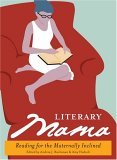
(More than) 10-pages-in book review - Literary Mama: Reading for the Maternally Inclined

In a rare exception to my (patent pending) ten-pages-in book review, today’s review comes after I have voraciously consumed and thoroughly enjoyed the entire book.

Today I have the great honour of hosting a stop on the blog book tour for Literary Mama: Reading for the Maternally Inclined. This book is an anthology of small works of fiction, literary non-fiction and poetry that have appeared in the Literary Mama e-zine and have been lovingly assembled by editors Andi Buchanan and Amy Hudock.

Remember the book review I did last week, where I complained that the book was sterile and devoid of emotional impact? I said it lacked any insight into the act of mothering. This wonderful collection is the antithesis of that. It teems with emotion, with meaning, with – with – well, with motherness. In every single piece, I found something that resonated with me. The essays moved me - some to tears, some to laugh, many to think.

Here's how much I liked this book: Andi was nice enough to send me a courtesy copy for review, and while looking for it earlier this week to put a few finishing touches on this review I realized that my copy had disappeared. Gone. Last time I saw it, it was dangerously close to the pile of mostly-digested weekend newspapers (which are now consumed over the course of days instead of hours). I suspect it got recycled. But I'm going to buy myself a copy, because I liked it that much.

Anthologies are perfectly suited for busy mothers who love to read. Dipping in and out of this collection was like snacking on indulgent little treats, rather than sitting down to the full meal that is a novel. I stole 15 minutes after my shower one Saturday morning to read Cassie Premo Steele’s charming fiction vignette Chocolate, about a mother navigating the minefield of teenage sexual curiosity while making a cake with her daughter. I was moved to messy public tears on the bus while reading Heidi Raykeil’s Johnny, an excerpt from her forthcoming memoir about losing her infant son. After enjoying Jennifer Eyre White’s essay Analyzing Ben one Sunday afternoon at the tail end of naptime, I was compelled to read parts out loud to Beloved and couldn’t get through them without snickering.

I could go on all day drawing your attention to this morsel or that throughout the anthology. I usually find myself only skimming poetry, partly because I am intimidated by it, but I am haunted by Megeen R. Mulholland’s Miscarriage of an English Teacher and have gone back to it several times. The sense of struggling for control, of insisting on the importance of the mundane, of breathing in tiny irregular breaths because you can’t open your lungs enough for a full breath – it’s exactly how I felt after my own miscarriage.

This book makes me want to write. It has inspired me. And I don’t mean that in a hyperbolic way; I just mean that it makes me want to find the time and to really try my hand as a writer. It sure satisfied the reader in me!

By happy coincidence, my friend and bloggy mentor Ann Douglas is also hosting a stop on the LM blog book tour today. It was through Ann that I was first introduced to Literary Mama last year – and for that I am deeply grateful.

You know what this book is? It's a perfect Mother's Day gift. No, scratch that - it's the perfect gift for a mother, just because.

Labels:


Wednesday, February 15, 2006


10-pages-in book review: Woman First, Family Always

I’ve been agonizing over this review.

About a month ago, I received an e-mail out of the blue, asking me if I’d be interested in receiving a book to review. I was so excited and proud to have been deemed worthy of solicitation! (Yes, I am easy to please.)

Before I get into the actual review of the book, I thought I’d share a couple of thoughts on the process. Maybe it’s because I’m a communicator by day and a blogger by night, but I’m fascinated by how bloggers have become a market worth targeting. Businesses are quickly learning that bloggers are valuable opinion leaders. We’re the ‘connectors’ in Gladwell’s Tipping Point model, the ones who build networks and share information. Bloggers have reach, and even those of us with only moderate readership have a strong voice. We’re turning traditional marketing models on their ears in many ways, and smart businesses are ready to take advantage of it.

It’s flattering to have been chosen to get a free book, but I’ve recently heard of bloggers being offered all sorts of cool stuff to review: DVDs of the Electric Company, free cleaning products (!), and even trips to Amsterdam.

And now the crux of my dilemma. I received the e-mail offer, and I said ‘Sure, I’d love a free book.’ There were no strings attached, no promises on my part to do any kind of review, let alone a good one. The publicity agent gave me some background info and a couple of jpegs, should I wish to incorporate them into my review. And less than a week later, my brand new book arrived.

The problem is, I didn’t really like it. In any other circumstance, I would have posted a scathing and sarcastic review of this book. I would have had a lot of fun mocking it. But I want to be nice, because they were nice and sent me a free book. So here we go.

I’m reading Kathryn Sansone’s Woman First, Family Always. Kathryn is an American mother of ten kids, and the book is her way of helping you live your life with the same level of success, satisfaction and happiness that she has achieved.

Kathryn was ‘discovered’ by Oprah (yes, that Oprah) when she attended a taping of Oprah’s show for her 40th birthday, and in the post-show chat had the opportunity to tell Oprah that she was staying fit even though six months pregnant with her ninth (!) child. Oprah was enamoured, so much so that she paid a visit to the Sansone family and even featured them in her monthly magazine, and shortly thereafter voilà, Kathryn became an author. She says, “[Oprah] referred to me as the role model of motherhood – quite a hefty title, but one that makes me think I might be able to affect a wider group of women with some practical advice that has helped me through the years.”

(pauses to gather thoughts and dial down sarcasm-meter)

The book is divided into three sections – Your Self, Your Marriage, and Your Family & Kids - and each section has 30 ‘reflections' ranging in length from a couple of paragraphs to a couple of pages. They are not quite self-help, but neither are they anecdotes; they fall into a bland and colourless netherworld between the two. For example, reflections in the “Your marriage” section include:

11. Don’t Nag
12. Argue – the Right Way
17. A Little Lipstick Goes a Long Way
19. Make Your Bedroom Your Sanctuary
20. Date Nights are a Must

Similarly, the “Your Family & Kids” section includes reflections titled:

7. Be an Emotional Coach
11. Mind Their Manners
19. Teach Kids to Manage Time
And even,
22. Select the Right Paediatrician for You.

As you might have guessed, I had trouble garnering anything helpful from this book. Sansone isn’t an expert – she doesn’t even have Dr Phil’s questionable qualifications. I’d forgive her lack of credentials in a minute if she had an engaging voice or a unique style to her writing – after all, you don’t need a license to mother, and she’s had a lot of experience. And it’s not the content I have issue with; it’s all reasonable advice. It’s just that it’s so sterile it’s devoid of any traces of humanity. It’s a self-help book written by a Stepford Wife.

A book written by a mother of ten kids has a lot of potential. I mean, I come up with stuff with only two kids, and she's got five times the source that I do. I'd've loved to hear how you manage laundry for 10 kids, or what mealtimes must look like, or even how you get from one place to another with that many people to corral and transport. What's it like delivering that 10th baby - do you need a sling to hold it in place for the last trimester? How do you make sure each child gets individual attention when they outnumber the parents five to one? But, unfortunately, rather than intriguing insight into the author or her day to day life, you get some platitudes and suggestions for living well.

She seems like a nice lady, she really does. And anybody who can raise ten kids has my respect. In the end, her key point that you have to love yourself and treat yourself well is a good one. Heck, I’d say 90% of the book is filled with good advice. And I’m really flattered that her publicist sent me the free book. So go ahead, take a read of it and let me know what you think. But I just couldn’t warm up to this one.

Labels:


Thursday, January 12, 2006


10-pages-in book review: A Long Way Down

One of the best parts of the holidays is having a little bit of extra time for reading, once the chaos that is Christmas abates. By sheer luck, my turn in the queue for Nick Hornby’s A Long Way Down came up after a wait of several weeks just in time for me to indulge in a little holiday reading, and I’m just far enough in to offer the latest in my ongoing series of 10-pages-in book reviews .

Even if you don’t recognize Nick Hornby’s name, you’ll recognize the titles of some of his books that have been made into movies: Fever Pitch , High Fidelity , and About A Boy. I have to admit, I’ve never read any of them, but High Fidelity is one of my favourite movies - mostly because I have a thing for John Cusack. But when I realized that the same person had written all these books, I had to take him out for a spin and check out his goods for myself. And that’s how a literary crush is born.

But back, for a moment, to the book. A Long Way Down is the story of four people whose lives, on an ordinary day, would likely never intersect. But this is no ordinary place, and no ordinary day. It is, in fact, New Year’s Day, and our four protagonists meet on the roof of a 15-story building in London, where each of them have come to commit suicide.

The story is told, by turns, through each of their eyes in a first-person narrative. Hornby does a wonderful job of making each character’s voice distinctive, so you never have to flip back to the beginning of a chapter to see who is speaking.

Martin is a smart, bitter C-list celebrity, a former breakfast television host who has become more infamous than famous after getting caught having a fling with a fifteen year old. He says of his suicidal tendencies: “On New Year’s Eve, it felt as though I’d be saying goodbye to a dim form of consciousness and a semi-functioning digestive system - all the indications of a life, certainly, but none of the content. I don’t even feel sad, particularly. I just feel very stupid, and very angry.”

JJ is an American who had aspirations to be a rock star but finds himself delivering pizzas. He quotes Oscar Wilde but can’t utter an entire sentence without using fuck as an adjective or an adverb. He tells us, “The trouble with my generation is that we all think we’re fucking geniuses. Making something isn’t good enough for us, and neither is selling something, or teaching something; we have to be something. It’s our inalienable right as citizens of the twenty-first century. If Christina Aguilera or Britney or some American Idol jerk can be something, then why can’t I? Where’s mine, huh?”

Jess is a wild and unstable young woman. I know her type so well, and yet am having a hard time describing her. She inhabits the polar opposite of my life of stability, sunshine and acceptance. She is shallow and thoughtless, and says whatever comes into her head. When another character mentions being engaged, Jess is shocked by the concept: “You did? Really? Okay, but what living people get engaged? I’m not interested in people out of the Ark. I’m not interested in people with, with like shoes and raincoats and whatever.” People with shoes and raincoats don’t deserve respect in Jess’ world.

And finally, there is Maureen, a middle-aged woman who has spent the last 20 years of her life as a single mother caring for a severely disabled son who can neither move independently nor communicate with her. Her innocent naivety born of inexperience is a foil for Jess’s overly well-informed naivety. In considering JJ, Maureen thinks, “without knowing anything about him [I thought] that he might have been a gay person, because he had long hair and spoke American. A lot of Americans are gay people, aren’t they? I know they didn’t invent gayness, because that was the Greeks. But they helped bring it back into fashion.”

(Sorry for the extensive quoting, but really, I could go on for days pulling lovely little bits out of this book.)

Their lives intersect on the roof, where each has come to commit suicide – some with more forethought than others. Distracted by their shared misery – misery being about the only thing they have in common – the unlikely quartet find that the moment for suicide has passed. Suspended in a strange limbo of thwarted suicidal intent, detached from the painful reality of their lives at least until the sun comes up, they band together for a kind of quest, and set off into the darkness of New Year’s Eve to find the fellow who has broken Jess’ heart. Really. When you read the book, you’ll get it. By turns madcaply comic and painfully insightful, it’s a moving and unforgettable story.

I officially have a crush on Nick Hornby now, in much the same way I have a crush on Douglas Coupland. (Is it weird that I don’t have much patience for chick lit, but am developing a thing for lad lit?) Hornby and Coupland are, in fact, very similar writers. They have the same ear for dialogue and eye for quirky characters, and both have their finger firmly placed on the pulse of modern culture. They both use humour and pathos to evoke how it feels to be alive and watching the world in the twenty-first century. Where Coupland’s work clearly echoes his own Canadian-ness, Hornby’s book is infused with what he referred to in a Guardian interview as “English miserablism”. I love this term – it captures perfectly the distinctive flavour of this novel and its characters.

I haven’t been this excited about a book since The Time Traveler’s Wife. Hornby is such an excellent writer that I'm disappointed I haven't discovered him before now. I could go on – there’s so much more to say. Except I have to get over to the library Web site and reserve a few more of Hornby’s books, because I’m going to need a really good book when this one is done.

Labels:


Friday, January 06, 2006


Ten-pages-in book review: The Penelopiad

Time for another 10-pages-in book review. I'm a little less than a third of the way through Margaret Atwood's The Penelopiad, but it's a surprisingly quick and easy read and if I don't write this now I'll be done the book soon.

The Penelopiad is one of the first three books in an ambitious series called 'The Myths' from Canongate Books. According to publisher Jamie Byng, "From the outset the idea was to approach topclass writers from all over the world and invite them to retell any myth in any way they chose. And in turn their myths would be published all over the world... By my calculation we will publish the 100th myth in this series on March 15th 2038." I love the idea of retelling myths and finding relevance for the modern reader.

That's exactly what Margaret Atwood has done. Penelope is the wife of Odysseus, hero of Homer's epic poem The Odyssey. The Penelopiad is her story, from her unhappy childhood (her father tried to drown her) to her marriage to Odysseus (he won her in a footrace, after drugging the other competitors), her lifelong rivalry with her cousin (the beautiful and infamous Helen of Troy), and her struggle to manage the household for 20 years while Odysseus runs off to fight the Trojan war.

I remember struggling through The Iliad and The Odyssey in school. Matter of fact, I think I gave up and read the Coles Notes of The Odyssey to get me through the exam. While I'll read just about anything, epic poetry has never been something I've enjoyed. I studied ancient mythology from dozens of perspectives in my academic career (I was a liberal arts student, after all), but no telling of these stories was ever so interesting, so compelling and so real to me as this version.

The story is told first person by Penelope from her current home in the afterworld, in a dry tone that is by turns imperiously detached and conversationally witty. You can't help but laugh when she talks about the gods having sex with mortals: "To watch some mortal with his or her eyes frying in their sockets through an overdose of god-sex made [the gods] shake with laughter."

Penelope's unique perspective from Hades gives her insight into our modern world. She tells the reader, "More recently, some of us have been able to infiltrate the new ethereal-wave system that encircles the globe, and to travel around that way, looking out at the world through the flat, illuminated surfaces that serve as domestic shrines." In Hades, she inhabits the past and the present simultaneously, making her voice resonate with the modern reader.

Hers is not the only perspective on the retelling of the Homeric myth, however. Every so often, Penelope's murdered maids take over the telling, interrupting with skipping rhymes, poems and ballads. They are not so much a greek chorus as a chorus line, as cheeky as Penelope herself.

I got this book as a stocking stuffer, and that's just about as perfect an origin for it as I can imagine. It's light reading on a heavy subject, an enjoyable telling of a well-known myth from a fresh perspective. It's clear Margaret Atwood had fun in turning Homer's epics inside out, and I enjoy her work most when she doesn't take herself too seriously.

And oh, how I wish I could turn a phrase like she does. That alone makes this book worth reading, just for the sheer joy of seeing words strung together with such effortless beauty by someone who truly has the gift.

Labels:


Tuesday, December 20, 2005


Ten-pages-in book review: Blood Memory

By special request for James, who happened to ask the other day if I had any forthcoming 10-pages-in book reviews just about the time I was thinking of writing one.

I come by my love of reading honestly - one of my dominant memories from childhood is of my mother curled up around a good book. I used to read a lot of what she left lying around, which explains why I was reading Stephen King by age 10 (which, in turn, probably explains why I am to this day afraid of the dark. But I digress.) I invoke my mother here because she is still my 'dealer'. She buys paperbacks like other people buy groceries, and every few weeks I come home with a shopping bag full of hand-me-downs, most of which I never get around to reading.

I never have to buy the latest James Patterson or John Grisham or Janet Evanovich or Patricia Cornwell or Richard North Patterson (I could go on, but you get the point) because I know the week it comes out in paperback, Mom will aquire it and send it my way.

All of this by very long way of introducing the fact that it was her who got me reading Greg Iles, and I look forward to his new material via my dealer. I'm about 160 pages in to Blood Memory, which is a little more than 10, but since the entire novel weighs in near 800 pages, I'm following the spirit if not the letter of my own formula.

It's a good read. I'm having a hard time putting it down. The main character, Cat Ferry, is a forensic dental expert with a penchant for self-destructive behaviour. The novel is unfolding as two stories, one a set of serial murders in present-day (but hurricane-free) New Orleans, and the second the mysterious death of her own father 20 years before. Early in the story, Cat stumbles across evidence that makes her question the fact that her father was killed by a burglar, but her pursuit of the present-day serial killer and her myriad personal problems interrupt her quest for the truth.

It sounds a little formulaic when I lay it out like that, but it's a compelling story well told. Cat is the kind of protagonist that a lot of male authors seem to create - smart, sexy, and stormy. She makes some irresponsible choices that make me cringe, but I can still relate to her on the smart and sexy parts at least. (Stop laughing. My book review, my bias.)

At least twice so far, Cat has made mention of Thomas Harris' book Red Dragon, which is interesting because the story reminds me a lot of Silence of the Lambs. (Red Dragon was the prequel to Silence of the Lambs, where the character of Hannibal Lector is introduced. All books I also got from my mother, for what it's worth.) Strong, smart lead takes on creepy psychotic guy. I'm sure if I picked up on it, the allusion was intentional on the part of the author, since I'm not one to catch subtleties.

There's lots of delicious tension in this novel. The past intrudes on the present with an unsettling randomness that seems to be getting less and less random as the story progresses. I've lost my taste for a lot of the FBI/serial killer type novels lately, but this one has enough real character development and actual story behind it to make it compulsively readable.

My only complaint is that my wrist gets sore holding an 800 page paperback in bed, although I am grateful for the well-spaced font as I read blearily late into the night. I've been up past 10 pm twice this week reading it - that's the wee hours of the morning by my standards!

Edited to add: I finished this one over the holidays. I kept finding excuses to hide in a corner and read a few more pages. In the end it was a real page turner, but also very disturbing. I didn't really see anything come of the allusions to Thomas Harris, and the book went in a different direction than I was expecting. It was good, though, and I'll look forward to the next wrist-breaking Greg Iles book when it comes out in paperback.

Categories:

Labels:


Thursday, October 27, 2005


10-pages-in book review: The No. 1 Ladies Detective Agency

I love character books. A book doesn’t have to have a strong narrative structure or a lot to say, but I do love a book with endearing characters.

The No. 1 Ladies Detective Agency is a charming, unique book full of quirky characters. I first heard about it from a classmate in my French class a few months ago. Her linguistic skills are a little bit more advanced than mine, but I did manage to understand and retain the fact that this book is part of a series written by a Scotsman who grew up in South Africa about a woman who inherits a considerable sum from her father and uses it to open a private detective agency – the very first one operated by a woman in all of Botswana, maybe all of Africa. Seemed a little incongruous at the time, but then my translation skills are questionable at best.

When I picked this book up, I was expecting something along the lines of Stephanie Plum in the books by Janet Evanowich. I like her books because they're quirky and funny and fast-paced. The No 1 Ladies' Detective Agency is definitely quirky, but it is almost plodding in an endearing sort of way. Mma Ramotswe is insightful where Stephanie is dippy and polite where Stephanie is hopelessly crude. She’s also likely the size of three Stephanies put together. They'd probably like each other a lot, but I can't imagine a universe where they'd intersect.

Having said all those nice things, I must now admit that I'm stalled about a third of the way into this book. I really like it, I would recommend it to you in an instant, but I'm not sure if I'm going to finish reading it. My number came up for The Kite Runner in the public library queue (I started at 585th in line back in the summer) and I dropped this to read it. Looking back, I'm not so sure I should have bothered, but that's a blog review for another day. Even though I genuinely like The No. 1 Ladies Detective Agency, I'm having a hard time convincing myself to pick it back up again.

A question for the commenting crowd: when you read, do you choose things that are familiar and to which you can relate, or do you like to read about people who are completely different from you, whose life experiences are completely dissimilar to yours? I was initially doubtful about both The Kite Runner and The No. 1 Ladies Detective Agency largely because they are set in a world completely different from mine. What do I know of Botswana or Afghanistan? And yet, I found the setting and the striking differences from my experience to be one of the most compelling things about these books.

Categories:

Labels:


Wednesday, September 21, 2005


10-pages-in: Motion Sickness and Typing

I’m reading two CanLit memoirs right now, one forgettable and one fabulous. So while I’m considerably more than 10 pages in to either of them, I can’t help comparing and contrasting them.

The first is David Layton’s 1999 memoir and first book, Motion Sickness. It’s mostly the story of his childhood living with and without his father, famous Canadian poet Irving Layton, and his slightly off-balance mother. Because I so liked his debut novel The Bird Factory, I thought I would enjoy his memoir as well.

Not so much.

I’m about two-thirds of the way though, and I’ve actually stopped reading it. It’s a library loaner, so I’ve renewed it for another three weeks in case I work up the stamina to see it through to the end, but it’s probably going back unfinished. After quite liking his first-person protagonist in the fictional Bird Factory, I find his autobiographical self quite unlikeable. The story of his childhood, which mostly seems to consist of his mother dragging them from Toronto to Britain to Greece and points in between, is considerably less interesting that you might expect.

On the other hand, I am completely in love with the rather unlikeable Canadian author Matt Cohen only half way through his memoir, Typing: A life in 26 keys. He weaves his own “how I became a writer” story tightly into the coming of age of nationalist Canadian literature, against the backdrop of free love and free drugs in 1960s and 1970s Toronto. I’m half-way through, and with each passing page I further regret that Cohen died only two weeks after this book was complete. It’s a compelling story well told – what more do you want from a book?

If nothing else, these two stories are a good illustration of why you should write your memoirs at the end of your career and not at the beginning.

Do you read more than one book at a time? I usually have one stashed beside my bed, and another tucked into my bag for reading on the bus. I try to read non-fiction during daylight hours, because by the time I'm tucked into bed I want sheer escapist entertainment with no thought required. In general, aside from the slew of writers' memoirs and manuals I've read lately, I don't generally like non-fiction. What's your favourite genre?

Categories:

Labels:


Monday, August 29, 2005


10-pages-in book review: The Bird Factory

I read a review of David Layton's The Bird Factory in the newspaper, and managed to get a copy from the library in fairly short order. When I read the review, I knew it was something I'd have to read because it touches on a couple of themes dear to my heart.

First, the author is a 30-something Canadian, and Canadian-ness is often enough of a selection criteria to just get me to open a book. Second, he happens to be the son of one of the grand old men of Canadian poetry, Irving Layton. Third, the review was generally positive. Fourth, and foremost, was the subject matter: The Bird Factory is about a 30-something guy whose life starts to spin out of control when he and his wife have trouble procreating, and he finds out he has lazy sperm. Among other things, the novel is about going through in vitro fertilization (IVF) from a guy's perspective.

For the same reasons I wanted to read this book, I wanted to dislike it. See, we Canadians have this deeply ingrained quirk that makes us want to see successful Canadians knocked down a notch or two. I had hoped I'd risen above this nasty little peccadillo, but I fear not.

By way of illustrating the point, let me retell this story of a friend's first visit to the east coast. He was watching the men fish for lobsters. They'd haul up a trap and open it and shake the lobsters into a wide, shallow bin then they'd drop the open trap back into the water. (Pardon me if I gloss over the details. The lobster fishery is not something I've studied in any amount of detail.) The point is, the man watches the lobster fishermen (fisherpeople, I guess) for quite a while before his curiousity overcomes him.

"Excuse me," he says, "but do you mind if I ask a question? That bin is so shallow, the lobsters should have no trouble climbing over the side. How are you keeping them from escaping?"

To which the lobster fisher person replies, (insert salty east coast accent here) "Well, me boy, these 'ere are Canadian lobsters. Any one of them gets too close to the top of the pile, 'tothers will just drag 'im back down agin."

More succinctly, as my dad recently put it, a Canadian is someone who will knock you down to size, then apologize for it.

So for reasons that are ingrained in me culturally, there's an odd little piece of me that wanted this to be a bad book. Thinks he's clever, does he? Writing about infertility? Thinks he has some insight, maybe some talent?

Turns out, he does have both insight and talent. It really is a good book. Layton's wry humour, clean writing and genuine charm have me hooked. I'm a little more than 10 pages in - more like 60 - but just thinking about it as I'm typing makes me want to curl up and read another chapter to find out what happens next.

According to the review I read, Layton has gone through IVF himself, so he knows whereof he speaks. I found myself at various key points in the narrative thinking, "No, that's not how it was for us," then realized that he's not narrating this from the woman's perpective, he's narrating it from the man's - something to which I can't really speak. I know what Beloved said and did, but I can't claim to know how he felt. So when I was getting a little agitated with the protagonist's laissez-faire attitude, it served as an interesting reminder that maybe my husband had a different way of experiencing that chapter in our lives.

I love a book filled with quirky characters, and this one has them to spare. Luke Gray, the protagonist, has a little lost boy quality that I would have found irrestible were I a literary character or he a real person. His wife Julia is a classic high-achiever who attacks the problem of infertility with a a single-minded focus that reminds me almost painfully of myself. Luke's father, an erstwhile film-maker, builds a river in their suburban basement when Luke is a boy. Luke has made a business of constructing large decorative bird mobiles, and he seems to adopt employees like stray cats - odds and sods of societal rejects who seem even less engaged in their lives than Luke is in his.

You don't have to have any experience in or even perspective on infertility to enjoy this book. It's an insightful, darkly funny and poignant examination of one guy's life and the forces that drag him through it.

Categories:

Labels: ,


Thursday, July 14, 2005


10-pages-in book review: Eleanor Rigby

I've just started reading Eleanor Rigby by Douglas Coupland, so here's my 10-pages-in book review, at about 30 give-or-take pages in.

I should admit a bias up front. I have a sentimental thing for Douglas Coupland, and he could write the instruction manual for my sewing machine and I'd read it three times. And because I have such a fondness for him, I tolerate, in the way we tolerate the idiosyncracies of the ones we love, a certain amount of quirkiness that I might not take from an off-the-shelf new author.

The thing about Coupland is that he writes to a me I sometimes wish I were. He writes to a me that is a little more hip, a little more jaded, a little more cynical. His work appeals to the slacker in me that rolls her eyes at the bright-eyed enthusiast who is usually in control. And yet, the same thing that draws me to his work is what makes me impatient with it. Sometimes it is too laissez-faire, too negative, too bleak.

This book seems a little bit less hipster than some of his other work, but his voice is so incredibly distinctive that I'm sure I could pick his style out anywhere. Ironically, voice is my only complaint with this book. The main character Liz Dunn is, demographically at least, quite a bit like me. She's a mid-30ish Canadian working girl. She also happens to be friendless, incredibly lonely, and by her own description, quite fat, three things which I am gratefully not. But her voice lacks the insecurity that a lonely, overweight woman of my age would have. In fact, she doesn't ring true to me at all. Then again, that divergence from what we might expect from stereotypes seems to help keep me interested in what happens to Liz.

It's been a while since I've read it, but isn't She's Come Undone by Wally Lamb also about a lonely fat woman? I hated that book. Found it depressing and pointless. Eleanor Rigby, at least, has some potential. Although I am having a hard time connecting with the protagonist, I at least am curious about her and wonder what her story is. It's enough to keep me hooked.

I need some new suggestions. What have you read lately that you loved? I've requested The Kite Runner and Will Ferguson's Happiness and Yann Martel's Self from the library, but am queued at 302 for the former and 12 for the latter, so I need some instant gratification with vacation time coming up. Any recommendations?

Categories:

Labels:


Monday, June 20, 2005


10 pages in book review: On Writing

This review is a bit of a cheat on the 10-pages-in formula I set up for myself. I started reading Stephen King's On Writing, A Memoir of the Craft on the bus on the way home on Friday, and I simply couldn't stop reading. By the time I went to bed Friday night I was more than 50 pages in. It's that good. I'm now 174 pages into it, much more than half way, and it was a struggle to decide whether to write about it or just curl up and enjoy it. Something that rivals blog for my attention must be good.

It's quite strange, in fact, that I haven't read this book before now. I've consumed voraciously almost everything else Stephen King has written. I clearly remember reading Firestarter when I was about ten years old, and I've been working my way through his oeuvre ever since. I don't understand why people denigrate his work as populist, and I don't understand why fiction has to be onerous to be well-written. I think he drifted away from his muse back in the 1980s and into the 1990s, but after reading Hearts in Atlantis and From a Buick 8, I can clearly see he's back in form and scaring the hell out of me.

So even though I would easily list him in my top five favourite authors, and even though I am always hungry for advice on how to improve my writing, somehow I never connected these dots before. My loss, at least in time. I should have read this years ago!

But it's not just a collection of writer's tips, which is what I was more or less expecting. There are some side-splittingly funny anecdotes from his childhood, a few of which I tried to read out loud to Beloved on Friday night. I couldn't get through them without gasping through my laughter, and we laughed so hard we even brought a previously bedded Tristan to the top of the stairs to see what his parents were going on about.

Aside from the memoirs, it's got some great writing tips. He covers everything from knowing your tools (grammar, vocabulary, etc.), to using active voice, to avoiding adverbs in dialogue attribution. (He argues that adverbs in dialogue attribution are superfluous, and the reader should be able to tell from your context whether she shouted menacingly when you write 'she shouted'.)

The section I'm reading right now covers my big questions: what to write about and how to find your muse. It's heady stuff, and he presents it in a way that has you convinced all you need to do is set yourself up with a keyboard, a couple of hours a day and a half-baked idea with potential, and you're on your way to your first best-seller.

So since I'm more than half way through, I'll go out on a limb and assume this one is going to be golden all the way through. If I change my mind in the last 20 pages, I'll be sure to drop back in and let you know.

(On that note, I've taken Troy's excellent suggestion to heart, and after I finish the books I've talked about in my 10-pages-in reviews, I'll go back and edit in a follow-up to see whether my final impressions matched my first ones. I've edited the review of Case Histories just now to add my final thoughts.)

Have you read On Writing? What did you think? Have you read any other 'writers on writing' books and would you recommend them?

Categories:

Labels: