<$BlogItemControl$>

Monday, August 27, 2007


Best quiz results ever!

(Note: Although Postcards from the Mothership is now live at http://danigirl.ca/blog, I'm continuing to cross-post for a couple of weeks until I get all the kinks out. See the original post at http://danigirl.ca/blog/2007/08/27/best-quiz-result-ever/)

***


As seen at Expectant Waiting.


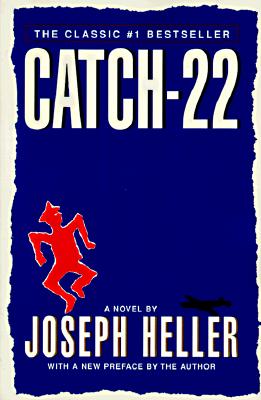
You're Catch-22!

by Joseph Heller

Incredibly witty and funny, you have a taste for irony in all that you see. It seems that life has put you in perpetually untenable situations, and your sense of humor is all that gets you through them. These experiences have also made you an ardent pacifist, though you present your message with tongue sewn into cheek. You could coin a phrase that replaces the word "paradox" for millions of people.


Take the Book Quiz
at the Blue Pyramid.


Is that not the best quiz result ever? I read Catch 22 when I was a kid and loved it even then. I should crack it open again.

***


Speaking of books, it's back to school time, and Andrea over in the Fishbowl has a great back-to-school photo contest. You can win an HP Photosmart C5280 printer/scanner! Click over to Andrea's place for details and some good photography tips, too.

Labels: , ,


Sunday, July 22, 2007


Deathly Hallows - Almost half way

I woke up yesterday morning just after 6:30 to a brilliant blue sky and two sleeping preschoolers, and when I went downstairs I could barely even finish making up a pot of coffee before I cracked open the copy of Harry Potter and the Deathly Hallows that Beloved had picked up at 12:01 the night before. (I don't think the Saturday paper has ever sat, unread and even un-leafed-though, for an entire day while I was home before. Usually, I read it cover-to-cover through the weekend.)

I'm almost half way though the book. I'm reading it more slowly than usual, trying hard to remember details I would ordinarily skim past. I'm finding the part where I am a little slow going, but the curiousity hook is deeply embedded, and I think I'll be done by the end of today if not early tomorrow.

I'm in self-imposed media lockdown lest I stumble across a spoiler somewhere before I'm done. Beloved already risked death by telling me the chapter title of the last chapter, and I told him he was officially not allowed to speak of the book in any way or form until I'm done. We've got a book-sharing arrangement where the book is mine to read by daylight and he's allowed to read it by lamplight. As long as my bookmark stays ahead of his, we'll be fine.

Coffee's finished brewing, time to get back to the book....

Labels:


Wednesday, July 18, 2007


Yeah, I suppose I can see that

Filched from Angry Pregnant Lawyer and Mimilou:

What Harry Potter Character are You?

Hermione Granger

You are a smart and intelligent person. You use your smarts to help out friends. You can be emotional at times but you always seem to be in the mood to help someone out.

Personality Test Results

Click Here to Take This Quiz

quiz
Quizzes and Personality Tests


Beloved has decided to get a jump start on me and pick up Deathly Hallows at midnight on Friday at our local book store. It will be waiting for me when I wake up on Saturday. Being woken up at 6 am on a weekend never sounded so appealing!

Labels:


Friday, June 29, 2007


Harry Potter and the invisible horses

This has been bugging me. I've been re-reading the entire Harry Potter series since some time in February or March, and I've got three weeks to finish re-reading Half Blood Prince before the last one comes out.

If you are even remotely a fan, I highly recommend doing this, by the way. I read the first three books back in 2000 or so, and have read each subsequent one as it came out. (That and blogging may well have been the only two times in my life I was even incrementally ahead of the pop culture bandwagon instead of running behind it, begging to be let on.) Anyway, re-reading them has made me even more of a fan, and I'm going to be hugely disappointed when the last one is done and there's nothing left to anticipate.

But something is bugging me - well, aside from the central question around the ending of Half Blood Prince, which at least will likely be answered by the last book. But in the Order of the Phoenix, they have those flying skeletal horses - Thestrals? - that you can only see if you've witnessed death. Harry can see them by the beginning of the fifth book because he's witnessed Cedric's death in the Triwizard Tournament. But the central mythology around Harry is that when Voldemort tried to kill Harry his mother's love protected him, so Voldemort killed his parents instead. Wouldn't Harry have therefore witnessed his parents' death as well, especially since when he encounters the Dementors he talks about hearing his mother screaming? So hasn't he technically witnessed his parents' death as well?

This kind of things are keeping me up at night...

Labels: ,


Friday, June 15, 2007


Stalking Stephen King

I was 10 years old when I picked up a copy of Firestarter that my mom left lying on an ottoman. I was fascinated by the story of Charlie McGee, the little girl who could light fires simply by thinking about them, and by the way she was treated as a lab project. I became an instant fan, and went on to read almost all of Stephen Kings books... probably a large part of the reason that I'm almost 38 years old and still prone to being afraid of the dark! But in addition to scaring the pants off me at regular intervals for the past 30 years, I think I've also learned a lot about the craft of writing, and of storytelling, from Stephen King. Even after all the novels, I think On Writing remains my favourite of his works, and one of my greatest inspirations as a would-be writer.

So when we were noodling ideas on where to go on our summer vacation and we stumbled on Bar Harbor, and I realized that to get to Bar Harbor we'd have to drive through Bangor, Maine, my fascination with Stephen King helped seal the deal. I was introduced to the idea of Maine through the works of Stephen King: Salem's Lot, Carrie, Cujo, Pet Semetary, The Tommyknockers, and of course, It. I think It scared me worse than any other book in my life, and it's actually set in the town of Bangor, masquerading as "Derry."

I was delighted to find out that the Bangor visitors and convention bureau actually sponsors the Tommyknockers and More Bus Tour of Bangor, a tour of some of the places immortalized in King's work - and then was crushed to realize we will be missing the first tour of the season by a scant five days.

Reading this article in Maine Today about Stephen King's Maine, I followed references to Bett's Bookstore in the heart of Bangor, home of a giant collection of King's works and memorabilia. I sent a quick e-mail to the owner briefly outlining my fascination with Stephen King, our upcoming vacation and my disappointment at missing the bus tour. He returned my e-mail the same afternoon, saying he'd be glad to give me a copy of the same map they use for the tour if I'd like to stop by the store.

In my ongoing stalking research, I found this Roadside America link with photos and a map to the exact location of Stephen King's own house, just around the corner from the bookstore. I mean, it's one thing to take a walking tour of the Barrens *shudder* or to make my way up to the Standpipe, but to actually walk by Stephen King's house? Way wicked cool!

So, our trip to Maine will be memorable for many, many reasons. There's a playdate scheduled with an old bloggy friend I can't wait to meet, and the boys' first trip to the ocean (and out of the country, for that matter.) There will definitely be my first-ever visit to Target.

But Stephen King? I've got shivers just thinking about it.

Labels: , ,


Wednesday, June 13, 2007


Book review: Sweet Ruin

Today, I'm hosting a stop on MotherTalk's blog book tour for Cathi Hanauer's Sweet Ruin. (Disclosure: this means I get a free copy of the book and a small honourarium from MotherTalk.)

This was almost a 10-pages-in book review, because coming into the weekend I just wasn't sure I'd be able to finish it in time for my date on the bloggy book tour today. I have to admit, I was biased against the book as soon as it arrived. With it's girly pink cover and saucily bared shoulder, this book screamed chick lit to me and I've never been able to warm up to chick lit. More accurately, I haven't actually read any chick-lit, ever. Couldn't bring myself to peruse Sophie Kinsella, or pick up a Helen Fielding. The closest I've come is Janet Evanovich's Stephanie Plum, and I really don't think you can call a book about a bounty hunter chick lit, can you?

Anyway, all that to say that I did in fact judge this book by its cover. Even when I started reading it, I found it hard to warm up to the protagonist. Elayna Leopold is a 35-year-old wealthy subarban mother to six-year-old Hazel, and as the book opens she is recovering from a two-year depression following the loss of her newborn son, Oliver. After his death, she finds she and her husband Paul are simply going through the motions of their former life, hollow and bereft. Strike two against this book. When I signed on to the MotherTalk book tour, I didn't even know I was pregnant, and I almost stopped reading a few times last week just because I didn't want to think about healthy pregnancies that end in neonatal death. Kind of interferes with my new no-worries attitude, ya know?

But, I kept reading. I'm glad I did. About half way through the book, something hooked me deeply and completely, and I tore through the rest of the pages with breathless curiousity. The story examines Elayna's slow ascent from depression after the crushing loss of her son, and considers the eternal question of where the wife and mother ends and the woman begins. When she falls in lust for Kevin, the gorgeous 22-year-old artist across the street, she finds herself awakened and invigorated for the first time in years... and can I just take a moment here to say holy hell, does Hanauer ever know how to make a scene sizzle! Her descriptions of the magnetism of lust are evocative and breathtaking - literally.

Even though I never did warm up to Elayna's complex character - and I admit that a lot of that is simply judgementalism on my part, as I could neither agree with nor understand many of the larger and smaller choices Elayna made - I do appreciate Hanauer's impressive ability to flesh out a character. By far, the most interesting character in the book is Elayna's six-year-old daughter Hazel, a red-haired bundle of fiery energy and attitude perched precariously between being mommy's little girl and a preteen diva.

I found this book both compelling and hard to read. Hanauer is a good storyteller with a keen eye for detail and dialogue, and once the story starts moving it accelerates with the inevitability of a train wreck. You can see it coming, but you can't look away. But that's not to say that I didn't enjoy the ride - I just watched cringing, through splayed fingers, hoping that in the end at least the damage would be minimal. I found myself at times completely wrapped up in the story, my own guilt at hiding upstairs in stolen moments to read a few pages woven seamlessly into Elayna's guilt at her more dangerous choices. Mommy-guilt has more facets than I ever realized!

In addition to the story itself, this book had a few interesting features that I particularly liked. There were a handful of book club questions at the end, and an interview with the author that you can read on the Simon & Schuster Web site - but if you want to read the book, I'd wait and read them afterwards. It was satisfying to finish the book and then read the additional material with the story fresh in my mind, and I've always been interested in process when it comes to writing.

In the end, Sweet Ruin stayed just far enough on the literary side of chick lit to win my approval. While it had its racy and titillating moments, the depth of the characters and the complexity of the relationships was enough to both engage and satisfy me. I'd recommend it as an ideal summer beach book.

What are you reading this summer?

Labels:


Wednesday, June 06, 2007


Book review: Writing Motherhood

It's my turn to host another stop on a MotherTalk blog tour, this one for Lisa Garrigues' book, Writing Motherhood: Tapping Into Your Creativity as a Writer and a Mother. (Disclosure: for writing this review, I get a free copy of the book and a small honourarium from MotherTalk.)

The irony is that I have been writing this review for 40 minutes, and I'm only on the second paragraph - not because my words are stuck or any writerly block or lack of inspiration, but because Simon decided he wanted to poop on the potty tonight - which is still an arduous task requiring a team effort - and then laptop seized up, and then dog yakked on the carpet. Writing and mothering are fitful partners. There's no shortage of material, but often a serious shortage of available time.

Ahem, so where were we? Oh yes. Book review.

In Writing Motherhood, Lisa Garrigues offers tips and inspiration for mothers who want to write but don't know where or how to begin. She's an award-winning writer and educator, and each chapter of the book examines a different aspect of writing your "momoir" woven with vignettes from Garrigues' life. Each chapter ends with a few writing prompts, which Garrigues calls "invitations," and a select few "inspirations," salient quotes from writers and mothers. The inspirations I liked, but the invitations less so. Like a few other bloggers who reviewed the book on an earlier leg of the tour for this book, I'm not really a fan of writing prompts. I did, however, tuck a few of them away for blog fodder on a dry day.

The central premise of the book is that you MUST get yourself a notebook of some sort and transform it into a "Mother's Notebook." She devotes more than a page of tips to how to select a notebook, and another page to 13 reasons why you should write longhand. And right there, she lost me. Luddite that I may be, I'm still all about the keyboard. I'm so ridiculously out of practice that it's physically painful for me to write more than a paragraph, and I type at just the right speed to keep up with my lurching brain most days. Personally, I don't find handwriting to have any intrinsic craft value. The idea of composing or even recording my first impressions without the easy capability to cut, paste and delete with a keystroke and a swipe of the mouse is nothing short of torturous. Writing longhand may be romantic and creative, but it's also tedious and way too much work. I do carry a small notebook around with me, but even I have a hard time deciphering the half-formed thoughts and scrawled observations.

I found Writing Motherhood to be more spiritual than practical; there wasn't any moment when I gasped with inspiration and leapt for my quill (or keyboard), but neither did I find myself flipping impatiently through the pages looking for something of relevance. While I enjoyed the anecdotal style, I think I was hoping for something with more discussion on the craft of writing itself, something like Stephen King's On Writing - a book I found truly inspiring, and one Garrigues obviously also admired, as she refers to it often.

Writing Motherhood, therefore, is a good tool to help you find writerly inspiration from the act of mothering. It reads very much like the sort writing courses that Garrigues teaches, with each chapter examining a different aspect of where mothering and writing might intersect. The end of the book has a great section on resources, with a few books I'd like to pick up from the library for further inspiration. What I would like to see, however, is an expanded section on moving from private musings to published work, and a much larger section on using the Internet to share your work.

Aside from my disagreement with the central premise of the book, it did inspire me to think about myself as a writer. Garrigues loves the idea of a mother's notebook, but I see the blog serving the very same purpose. I force myself to write every day on blog, and every now and then I try to shake things up with different formats and styles of writing. Like Garrigues' mother's notebook, the blog is a place where I record the minutiae that makes life as a mother both delightful and devastatingly difficult, and also a place where I can play with form, style, and voice. I am slowly giving myself permission to consider myself a writer, even though I've yet to get the elusive external validation of a byline in the mainstream media.

Oh, and while I didn't completely forget that I offered up my slightly-used copy of The Big Payoff from my last MotherTalk review, I'm a little late. Congratulations to Myra! I'll e-mail you for your snail-mail coordinates.

Labels:


Friday, May 25, 2007


Book review: The Big Payoff

Today is my turn to host a stop on the MotherTalk blog book tour for Sharon Epperson's The Big Payoff: 8 Steps Couples Can Take To Make The Most Of Their Money -- And Live Richly Ever After. (Disclosure: I got a complimentary copy of the unedited proof and a small honourarium for participating in the book tour, and the link is built through my Amazon Associates account.)

I was interested in this book because my finances are a bit of a weak spot. We make a good chunk of change as a family, certainly more than I ever expected to make, and while we own our own home and half of a three-year old car (we'll own the other half in another three years), we have what I consider to be a sickening amount of debt, mostly consumer debt and the tail-end of Beloved's student loans. If we could get out from under the debt we'd be in great shape, but too much of our income goes to paying down the debt and we haven't really got a savings plan - nor have we started socking away money for the boys' bail college funds. I have the golden-handcuffs security of a freedom 55 government pension, but Beloved jokes that he'll be working from beyond the grave. In short, we're luckier than average in a lot of ways, but there are still lots of areas we need to work on.

Unfortunately, this book wasn't a huge amount of help for our family situation for one key reason: we're Canadian. This book has great information about 401(k)s and IRAs, 529 plans and Coverdell Accounts - none of which exist here. If you are American and looking for a great book with lots of specific details on the various types of accounts and tools you can use, I'd highly recommend this book.

The author, Sharon Epperson is a CNBC business correspondent and frequent contributor to a financial column in USA Weekend Magazine. She writes on what can be a complex and, let's admit it, somewhat dry subject with an easy style. The book is well-organized and easy to follow, even for a Canadian like me - I now have a greater understanding of American financial tools and options, at the very least.

In addition to the specifics of the American system, there was a lot of good general information, too. I particularly liked the section where Epperson reiterates the "60% solution" conceptualized by MSN Money editor in chief Richard Jenkins. The theory is that you limit all essential spending to 60% of your gross income. This essential spending, called "committed income", includes household expenses like rent/mortgage, home insurance, taxes, phone, utilities, basic food and clothing, basic transportation (including car payments, maintenance, gas, public transportation fees, etc.), insurance premiums, and fixed expenses like childcare. The remaining 40% of your income should be roughly divided into four groups: retirement savings, long-term savings and/or emergency fund; short-term savings, and fun money.

I have to admit, I haven't had time in this topsy-turvy month to actually sit down and figure all this stuff out, but I know I'm going to have to do it soon. The other issue that Epperson raises that had me toe-ing the carpet in guilty embarrassment was the need to sit down with your partner and create a budget. I'm terrible for budgeting, and I'm worse for communicating about finances. Beloved and I each have control over our own money, and I take care of most of the household expenses. In fact, our only joint account is the mortgage. We really have very little idea how much the other makes or where the money is going. It works for us, but it's not terribly practical. Epperson notes that "a budget helps facilitate communication." I think this is the best take-away from this book for me. The budget isn't a be-all end-all, but a tool to help foster financial openness. It's on the to-do list, I swear it is!

I had a few other grumblings about this book. Although it purports to be designed for middle-class couples, Epperson's version of middle-class seems to be a lot wealthier than my conception of the term. One of the main recommendations is that you should live on one income. Epperson recommends that if you are in a dual-income family, you try living on one income and putting the second income into savings or toward paying down debt. Ha! I'm sure we're at the high end of the middle-class scale, and there's no way we could do this any time in the foreseeable future.

Anyway, while this book didn't quite live up to my expectations for it, it still had enough morsels and nuggets that it was worth my time to read it. I am inspired, at least, to start making a formal budget and - gasp! - talking to Beloved about our finances a little bit more. Well, we can start by talking about his finances. It's better than nothing!

I'd be happy to donate my copy to one of my American friends. If you'd like a slightly-used unedited proof of The Big Payoff, leave a comment below and I'll make another random draw next Monday.

Labels:


Friday, May 18, 2007


Dangerous Book for Boys redux, now with more free books!

Did you think I forgot about the draw for the Dangerous Book for Boys, the one to compensate for the fact that Canadians couldn't enter the Harper Collins contest? Of course I didn't!

There were 22 comments on the thread as of Wednesday morning, one of which was me and one of which was a duplicate. I assigned everyone a number for the order in which their comment appeared and got totally sucked in playing with the Random Number Generator. Why I find random numbers so compulsively interesting is beyond me, but then, I also get lost playing in the thesaurus.

Anyway, twenty minutes later I remembered that I was there for a reason I was playing with the random numbers and got down to business. Since I couldn't get hold of anyone from PriceWaterhouse to validate the contest results, you'll have to rely on this screen capture and my word that the results are valid.

Congratulations to the 10th commenter and winner of the free book, Batman!

But wait! There's more! I'm pleased to tell you that there is yet another chance to win your own free (and autographed!) copy of the Dangerous Book for Boys, courtesy of the MotherTalk Blog Bonanza. For today only, you can write a post and join the MotherTalk Blog Bonanza in support of the Dangerous Book for Boys, and everyone who submits their link to MotherTalk before midnight tonight (May 18) will be eligible for entry in the draw for the free book. Plus, you get to play along with a fun bunch of literate bloggers AND get some traffic to your blog AND maybe find some excellent new blogs to read. There's nothing to lose! Full details are on the MotherTalk blog.

I was all ready to write a post today about raising 'dangerous' boys and how raising boys has changed my perspective on gender roles. After yesterday, though, I'm still feeling a little raw, and second-guessing whether my "boys will be boys" attitude is maybe a little too laissez-faire.

So instead, in this post that lacks any sort of structure whatsoever, I'll turn over the microphone to you. Tell me what 'dangerous' means to you. Is it important for boys to be dangerous? Is it something you encourage, or something you repress? Does being a 'dangerous' boy somehow affect the sort of man he will become? Do girls need to be dangerous, too? Should we tolerate dangerous behaviour more from boys than from girls?

Speak, bloggy peeps! (And, if you decide to post about this as part of the MotherTalk Blog Bonanza, make sure you tell Miriam at MotherTalk so she can link back to you.)

Labels: ,


Thursday, May 10, 2007


Win your own Dangerous Book for Boys!

Yesterday, Fawn noted that the Harper Collins contest to win a free copy of the Dangerous Book for Boys is only open to Americans. I sent a note to Andi at MotherTalk (editorial aside: Andi is the nicest. person. ever!) and she confirmed with the publisher that yes, the contest is only open to US residents. Sigh. It's hard being a Canadian sometimes. We can't vote for your American Idols, some of the coolest online stores don't ship to us, and you don't let us apply to be contestants on Survivor or the Amazing Race.

BUT! The publisher offered me a free copy of the book to share with one of you. That's a nice compromise, don't you think?

If you'd like to win your own copy of the Dangerous Book for Boys (see my review here if you missed it yesterday), leave a comment on this post. I'll leave it open through next Tuesday, May 15.

Labels:


Wednesday, May 09, 2007


Book review: The Dangerous Book for Boys

It's my great pleasure today to participate in the MotherTalk blog book tour for The Dangerous Book for Boys. (Disclosure: this means I get a review copy of the book and a $20 honourarium for playing along.)

Do you have any idea how to use your watch as a compass? Do you know the difference between a transitive and intransitive verb? Ever wanted to make a perfect paper airplane, or learn to juggle, or make a coin disappear? Ever been curious about the world around you and the things you are capable of doing? Then you must pick up, for yourself or the boy in your life, The Dangerous Book for Boys.

The Dangerous Book for BoysThis was a fun book to review. I'm already a minutiae junkie, and I love to know stuff. Useful stuff, esoteric stuff. That's the kind of stuff that's in this book; stuff to impress chicks with, and impress your schoolmates, too. And what a gorgeous book it is. Simply on a tactile level, it's a pleasure to hold, to admire the old-fashioned typesetting and carefully rendered illustrations.

It's not exactly a manual on how to be a boy, but rather an encyclopedia to satisfy the curiousity of the boy within all of us. The chapters are short, and follow no discernable pattern - much like the notoriously short attentions span of its intended audience. Each short chapter covers a different topic, including rules for common games (chess, stickball, poker and marbles), history and grammar lessons, science and nature, Shakespeare and poetry, and a generous list of how-tos, including how to build a treehouse, how to write in code or secret ink, how to make a go-cart, how to hunt and cook a rabbit (!), how to grow sunflowers and five knots every boy should know. And that's not even half of it!

The book is evocative of those mythic endless summer days of our childhoods, filled (in my case) by riding around the neighbourhood on my bike, stopping to catch minnows and cray fish in the creek and climb the trees in the ravine and then playing hide and go seek with the neighbourhood kids until well after dark; the kind of day we fear that our children will never get to experience in our hyper-scheduled, overprotective world. How to be Huck Finn in the 21st century.

It's an oddly practical collection of arcane information that seeks to satisfy a range of boyish curiousities and pique the interest of just about anybody who takes a moment to peruse the lovely, old-fashioned pages. We could all use a little bit more of this kind of knowledge, don't you think?

Curious? Check out the Dangerous Book for Boys website, or watch an interview with co-author Conn Iggulden on the Colbert Report. The publisher, Harper Collins, is even offering a chance to win one of 100 copies. (Edited to add: the Harper Collins contest is open to US residents only, but I have one copy to give away! Leave a comment on this post before Wednesday May 16 if you'd like me to enter your name in the draw!)

I like to joke about my barely repressed inner 14-year-old girl, but this book reminded me that I also have a barely repressed inner 12-year-old boy jockeying for position just below the surface of my psyche. My inner boy not only loved this book, but issued a challenge to the rest of my sorry self. There are two things I've always wanted to learn how to do: a cartwheel, and to juggle. Klutz that I am, it's probably not a great idea at this stage in my life to start hurling myself head-first at the ground. But right there on page 89, there's a fully illustrated set of instructions on how to juggle. It's high time I learned.

What have you always wanted to learn how to do?

Labels:


Tuesday, May 01, 2007


Book review: The Sneaky Chef

I recently received a review copy of Missy Chase Lapine's The Sneaky Chef: Simple Strategies for Hiding Healthy Foods in Kids Favorite Meals. When the publicist first offered it to me, I'll admit to being a little bit skeptical.

The blurb in the introductory e-mail said, "Learn how to make the meals your children already love -- but with secret sneaky ingredients that pack a healthy punch. Your kids will never suspect that there's blueberries pureed into their brownies, cauliflower in their mac 'n' cheese, or sweet potatoes in their lasagna -- but they'll love every bite! Here are simple, practical recipes and techniques that will help every busy parent create healthy meals for the whole family."

I was skeptical, but I was also curious. Curious, and rather exasperated at trying to get Tristan, my fussiest eater, to consume even a few bites from each food group every day, let alone hitting the recommended daily targets.

I was formulating a post in my head before I even received the book. I had doubts about the premise of the book, about the concept of hiding healthy food inside foods my kids might deign to eat. Spinach in brownies? How the hell would that work out? And it would probably be a lot of extra work, and I'm not so fond of cooking in the first place, let alone anything that makes cooking even MORE work. And anyway, isn't the point to teach kids to make healthy choices, not to trick them into eating good stuff they wouldn't even know was there?

Okay, so I was a little biased. And you know what? I ended up really liking this book. Mind you, I haven't actually tried any of the recipes so far. I'll blog a few of them over the next little while. But once I got over my initial skepticism, the recipes intrigued me enuogh that I've bought into the concept in principal.

My only criticism of the book itself is that it takes WAY too long for the author to expound upon her food philosphies. She spends three long chapters giving background and justifications and rationalizations, discussing why kids are fussy eaters and why we need to improve their diets. Can't say I learned anything from the first 55 pages, but I really liked the section titled The Lists, which includes a list of the 12 most important and 12 least important foods to buy organic. (#1 most contaminated food = peaches; #1 least contaminated food = sweet corn.) I was also greatly reassured that maybe this was a good cookbook for me, the world's laziest chef, by the fact that not only did I recognize all of the items on the shopping list of staples, but I already had most of them at hand.

The recipes weren't what I was expecting either. I was expecting tips like add shredded carrots to meatloaf and spaghetti sauce, and using apple sauce instead of oil in your baking; the kind of tips that are in my favourite-of-all-time cookbooks, the Podleski sisters' trio of LooneySpoons, Crazy Platesand Eat Shrink and Be Merry.

I admit, I cringed when I first read The Sneaky Chef's premise. And yet, the more I thought about it, the more sense it made. She suggests 13 make-ahead purees of concentrated, nutrient dense foods. For example, the "purple puree" contains baby spinach and blueberries with lemon juice; the "orange puree" contains carrots and sweet potatoes; and the "better breading" contains whole wheat bread crumbs, almonds, wheat germ and salt. The idea is that the purees and blends are rich in nutrients but deviod of unpleasant textures and easy to hide in foods kids will eat.

The thing I liked best about this cookbook is that it has a whole whack of recipes for foods my kids (and by kids, I mean Tristan and Simon and Beloved, the latter being perhaps almost as if not more fussy than the first) will actually eat.

Some of the recipes are simple in a "why didn't I think of that?" kind of way, like adding wheat germ to oatmeal (my kids, they love oatmeal from a box), or adding "orange puree" to quesadillas. I was won over completely by the idea of adding "orange puree" to canned pasta, as my boys adore that unnaturally neon-orange pasta in a can and I feel a twinge of empty-calorie and maxed-out preservative guilt every time I serve it.

There are more complex and interesting recipes, too. I'll be trying the Magic Meatballs soon. They contain the usual lean ground beef or turkey, a bit of tomato paste, an egg and some salt, but also 6 to 8 tablespoons of "green puree" (baby spinach, broccoli, sweet peas and lemon juice) and 1/4 cup of wheat germ. And both the Unbelievable Chocolate Chip Cookies (with hidden special Flour Blend, rolled oats ground to a powder, ground almonds and "white bean puree") and the Brainy Brownie (with "purple puree" - the one with spinach and blueberries!) sound intriguing enough to try at least once.

And for the truly lazy (you're looking at me, aren't you?), the author even suggests that if you are averse to food processors and blenders, you can replace the home-made purees with store-bought baby food.

Am I really thinking about putting a blend of spinach and blueberry baby food in my brownies? Hey, if I have learned one thing in this whole parenting adventure it's that my motto ought to be "whatever works."

What do you think? Crazy idea, or just crazy enough to work?

(Editorial aside: In my continuing capitulation to commercialization, I've finally signed on as an Amazon Associate. My book review links now contain a referral code that give me, in theory, a small commission if you happen to choose to buy one via my link. No pressure, though. The boys can always panhandle their way through college.)

Labels: ,


Friday, April 20, 2007


Confessions, candy swaps, connections - and books

This is going to be another of those posts where I dump the contents of my brain (and my in-box) into your lap and let you sort through it like bargain hunters at a flea market to find the shiny bits in amongst all the drivel.

First and coincidentally, I think it was the last brain-and-inbox dump that I told you about the cross-border candy swap that Notes from the Cookie Jar hosted. I was partnered with Jennifer from In Case You Ever Wondered, who sent us a great package including Easter Tootsie Pops (the boys love these!), cotton candy and green marshmallow Peeps! Did you see that, Andrea? Peeps!


I fell down on the job and completely forgot to take a picture of my outgoing package, but I tried to find candy that I thought was uniquely Canadian. While I couldn't find any Mack toffee, I included a Kinder Egg (okay, not Canadian, but not widely available in the US, from what I understand), a mix of mini-chocolate bars including KitKats, Coffee Crisps and Smarties, some Kerr's gumdrops, and a box of Thrills Gum. Jennifer's son said they should use the Thrills Gum for punishment!

Thanks to Scattered Mom for inviting us to play along! It was fun!

***

Speaking of good things that come in the mail, after a rather long drought that I sated by reading The Calligrapher, I have been blessed by the book gods lately. Nadine sent me two "just because" books, both of which will likely turn up in the 10-page-in reviews soon. (It's good to have friends who work for publishers!) Then I was offered a review copy of Missy Chase Lepine's The Sneaky Chef cookbook - review also pending.

And finally, have you heard about MotherTalk? I had the great priviledge of being a part of a MotherTalk salon back in October when we were in Toronto for the Motherlode conference, and I'll be blogging on the upcoming tour for the Dangerous Book for Boys (which arrived in the mail the very same day as The Sneaky Chef!)

But what I wanted to tell you about today is another one of MotherTalk's new initiatives: the MotherTalk Blog Bonanza. According to the e-mail from Miriam Peskowitz, this is how it will work:

MotherTalk will suggest a topic, post it on our blog and email an announcement. Whoever wants to blog, join us. This is not about an elite in-group with a secret code. No way, it's about sharing an experience, writing together, and feeling connected through our blogs. I can already imagine what fun it will be to click through each other's blogs and read all the posts.

For each MotherTalk Blog Bonanza, we also hope to have an informal contest, where the author might pick a favorite post, and send that blogger an autographed book, say. We're not big into competition, we just want to spice it up, and send you a MotherTalk Blog Bonanza Winner emblem for your sidebar.

Next Friday (April 27) is Fearless Friday, inspired by Arianna Huffington's book, On Becoming Fearless. From the MotherTalk blog:

Let’s all write about times in our lives when we stepped out of our comfort zones, when we challenged our usual fears and anxieties and all the nervousness that keeps us in line, keeps us in our places, and prevents us from having as much fun, as much influence, as much personal, inner-voice purpose in the world. Whether this stepping-out, this fear-overcoming, happens at home, on the playground, at school, work, in writing or in the aisles of Congress, let’s tell our stories, inspire each other, and make a place for ourselves in the world.

Click through to the MotherTalk blog for further instructions if you want to play along!

***

Have you seen True Mom Confessions yet? It's part post-secret, part group therapy. I first found it via one of my government / social media buddies, Ian Ketcheson, and Ali had a post up about it yesterday. I found it irresistibly compelling for the first little while. I love how you can vote "me too" but not "you're a moron" or "are you kidding me?", and I love that there is no commentary. But since the last time I checked, now they've added discussion forums and I think it takes away from the elegant simplicity of the original concept. Still madly addictive, though.

Labels: , ,


Tuesday, April 03, 2007


10-pages-in book review: The Calligrapher

I haven't been writing a lot of 10-pages-in book reviews lately simply because I haven't been reading any books worth talking about. In fact, it's been about a month now that in my prime book-reading time (on the bus going home) I've been reading magazines. Or just staring out the window. It's been a horrible drought.

Thank goodness, the drought has been quenched (that seems a little hyberbolic, but I've written myself into a corner barely five sentences in - that can't be good) with this latest book. I received it as a gift from the commenter otherwise known as Trixie, who really needs her own blog. (And again, I'm off track. FOCUS, woman.)

Ahem. So, this book - it's amazing. It's delicious. I can't remember the last time I savoured a book like this - the story, the language, the turns of phrase. It's exquisite and delightful, intelligent and wryly funny. It's called The Calligrapher, and it's a first novel by a British chap named Edward Docx.

The Calligrapher is the story of 29 year old Jasper Jackson of London, told in cheeky and clever first-person narrative. He's a raffish sort of fellow, a sophisticated and self-aware womanizer and serial heartbreaker; a younger, hipper Hugh Grant sort of character. He's a scamp and a scalliwag, just the sort of fellow whom I would find absolutely irresistible in real life - and as a literary creation.

He describes, for example, his preparations for the perfect aprés-amour breakfast when his latest conquest requests strawberries :


Even here, there is danger. The talented amateur, for example, will stride merrily out to the shops on the eve of the assignation and buy everything his forthright imagination can conceive of - muesli, muffins, marmalade, a range of mushrooms, perhaps even some maple syrup. Thus laden, he will return to stuff his shelves, fill his fridge and generally clutter his kitchen with produce. But this will not do. Not only will his unwieldy efforts be noticed by even the most blasé of guests - as he offers first one menu, then another - but, worse, the elegance and effect of seeming to have exactly what she wants is utterly lost, drowned out in a deluge of petits déjeuners.

No, the professional must take a very different approach. He will, of course, have all the same victuals as the amateur, but - and here's the rub - he will have hidden them. All eventualities will have been provided for, and yet it will appear as though he has made provisions for none. Except - magically - the right one.

Anyway, thank fuck I got the strawberries.

Jasper is also a formally trained calligrapher, and he is working on his largest commission to date, transcribing 30 songs and sonnets by the poet John Donne for an American buyer. Each chapter opens with a few lines of the Donne poem Jasper is currently transcribing, which happens to reflect the changing state of Jasper's life.

I must admit to an ignomious lack of awareness about poetry. Poetry is one of those things that I've tried valiantly to 'get', mostly unsuccessfully. About all I know of Donne is that he was a contemporary of Shakespeare, and that he wrote both holy sonnets and erotic love sonnets. In this book, I adore how the narrator uses the little bits of verse to explore how he feels, and also gives a little Poetry 101 lesson by walking the reader through Donne's verse. Donne's poetry is so cleanly woven into the fabric of the story and such a perfect foil for the unfolding storyline that I'm curious as to how the author constructed the novel. Did the author choose the sonnets and then build the story around them?

At just shy of 100 pages into the book, I've just come to a critical point in the story. Jasper, recently caught in flagrante delicto with another woman and turfed by his girlfriend, has become mesmerized by a mysterious woman who appears in the garden courtyard outside his home studio. In his own words, he falls apart as he tries to discern who this perfect beauty is and whether she is available.

I've long been a fan of 'lad lit', and this book seems a particularly worthy example of that genre. In one of the reviews of The Calligrapher I read, I think it was in the NYT, called author Edward Docx the little brother of Nick Horby. I can see that. Docx writes with the same delicious dry wit, but with an extra attention to language and turn of phrase that makes me positively salivate. I also enjoy how each phrase drips with what I can only describe as inherent Britishness - you can't read this prose without hearing the clipped wry British voice in it.

While I'm curious as to the outcome of the story, far from racing to the conclusion I'm content to savour each page as I read it. True, like a lot of first-time novels this one seems to succumb to its own bravado at times. Like Jasper, the book is perhaps a little too aware of its own cleverness on occasion, and the language comes dangerously close to excessive embellishment. But these are minor quibbles, and the literary excesses are actually a large part of this book's charm.

A book is a lovely gift at the best of times, but giving fiction - especially fiction you haven't yet read yourself, as Trixie admitted she hadn't - can be tricky. There are simply so many bad books out there, and so many more that are simply mediocre, that it takes an extraordinary amount of luck to have one so exquisitely enjoyable as this one simply be gifted upon you.

A bad boy who has a way with words. I never stood a chance.

Labels: ,


Wednesday, March 28, 2007


100 books meme redux

Saw Bub and Pie give the ubiquitous 100 books meme a great twist, and thought I'd try the same thing. I clicked back through more than 15 blogs trying to figure out what the original list of 100 books was supposed to represent, but couldn't find it. (You can see the original meme here.) The idea is to bold the ones you've read, but B&P came up with the idea of categories, which I shamelessly stole and then substituted with my own categories.


Better than reading a cereal box

The Da Vinci Code (Dan Brown)
Angels and Demons (Dan Brown)

The Lovely Bones (Alice Sebold)
The Lion, The Witch and the Wardrobe (C. S. Lewis)
The Mists of Avalon (Marion Zimmer Bradley)
The Red Tent (Anita Diamant)
Angela's Ashes (Frank McCourt)
A Tale of Two Cities (Dickens)
The Time Traveler's Wife (Audrew Niffenegger)
Interview With The Vampire (Anne Rice)
Catch-22 (Joseph Heller)
Les Miserables (Hugo)

The Diviners (Margaret Laurence)
Charlotte's Web (E.B. White)
Not Wanted On The Voyage (Timothy Findley)
Of Mice And Men (Steinbeck)
The Stone Diaries (Carol Shields)
Harry Potter and the Chamber of Secrets (Rowling)

Harry Potter and the Prisoner of Azkaban (Rowling)
Harry Potter and the Goblet of Fire (Rowling)
Harry Potter and the Order of the Phoenix (Rowling)

Shoulda stuck with the cereal box

The Secret Life of Bees (Sue Monk Kidd)
The Celestine Prophecy (James Redfield)

She's Come Undone (Wally Lamb)
The Kite Runner (Khaled Hosseini)
The Clan of the Cave Bear (Jean M. Auel)

Read it twice, or more

The Stand (Stephen King)
The Hitchhiker's Guide to the Galaxy (Douglas Adams)
The Catcher in the Rye (J.D. Salinger)
The Great Gatsby (Fitzgerald)
The Stone Angel (Margaret Laurence)

Harry Potter and the Philosopher’s Stone (Rowling) *
The World According To Garp (John Irving)
The Outsiders (S.E. Hinton)


School daze

Anne of Green Gables (L.M. Montgomery) – but I cannot remember a thing about it!
Wuthering Heights (Emily Bronte)
To Kill A Mockingbird (Harper Lee)
The Hobbit (Tolkien)

Little Women (Louisa May Alcott)
1984 (Orwell)
Great Expectations (Dickens)
The Handmaid's Tale (Margaret Atwood)
The Fountainhead (Ayn Rand)

Fifth Business (Robertson Davis)
The Little Prince (Antoine de Saint-Exupery) – in French, no less!
The Secret Garden (Frances Hodgson Burnett)
Watership Down (Richard Adams)
Lord of the Flies (Golding)

Started but not finished

The Lord of the Rings: Fellowship of the Ring (Tolkien)
Fall on Your Knees (Ann-Marie MacDonald)
The Bible - although after 13 years of Catholic school, I've got a firm grasp of the plot and how it comes out in the end
The Poisonwood Bible (Barbara Kingsolver)
Life of Pi (Yann Martel)


Erm, how did I miss this one?

Pride and Prejudice (Jane Austen)
Jane Eyre (Charlotte Bronte)
The English Patient (Michael Ondaatje)
The Grapes of Wrath (John Steinbeck)


Life’s too short

The Lord of the Rings: Return of the King (Tolkien)
The Lord of the Rings: Two Towers (Tolkien)
Crime and Punishment (Fyodor Dostoyevsky)
War and Peace (Tolsoy)
The Sisterhood of the Travelling Pants (Ann Brashares)
Ulysses (James Joyce)


Would have read by now, if I hadn't been wasting all my time blogging about books

A Prayer for Owen Meany (John Irving)
Atlas Shrugged (Ayn Rand)
Brave New World (Aldous Huxley)

Never got around to it

Outlander (Diana Gabaldon)
A Fine Balance (Rohinton Mistry)
Memoirs of a Geisha (Arthur Golden)
East of Eden (John Steinbeck)
Tuesdays with Morrie (Mitch Albom)
Dune (Frank Herbert)
The Notebook (Nicholas Sparks)
The Pillars of the Earth (Ken Follett)
I Know This Much is True (Wally Lamb)
Confessions of a Shopaholic (Sophie Kinsella)
The Five People You Meet In Heaven (Mitch Albom)
Anna Karenina (Tolstoy)
The Count of Monte Cristo (Alexandre Dumas)
The Thorn Birds (Colleen McCullough)
One Hundred Years Of Solitude (Gabriel Garcia Marquez)
Bridget Jones' Diary (Fielding)
Love in the Time of Cholera (Marquez)
Shogun (James Clavell)
Rebecca (Daphne DuMaurier)
Wizard's First Rule (Terry Goodkind)
Emma (Jane Austen)
The Good Earth (Pearl S. Buck)
The Bourne Identity (Robert Ludlum)
White Oleander (Janet Fitch)
A Woman of Substance (Barbara Taylor Bradford)
Kane and Abel (Jeffrey Archer)
In The Skin Of A Lion (Ondaatje)

Who?

The Alchemist (Paulo Coelho)
The Power of One (Bryce Courtenay)
Ender's Game (Orson Scott Card)
Tigana (Guy Gavriel Kay)
A Tree Grows in Brooklyn (Betty Smith)
Blindness (Jose Saramago)

* I've started re-reading the entire Harry Potter series, starting with the Philosopher's Stone, in anticipation of book 7 this summer.

(Edited to add: oops, it's a meme for sharing. Consider yourself tagged if you want to play along!)

Labels: ,


Monday, March 05, 2007


Children of Men book club

A couple of weeks ago, I posted my 10-pages-in book review of PD James' Children of Men. At the time, I mentioned I'd read the book to be a part of today's Barren Bitches Book Club tour. The idea is that each person who participates in the book club submits a question to the group, and then everyone answers five of the questions on his or her own blog.

With the birthday festivities of the weekend, I didn't get the chance to devote much time to this, so I'm going to cop out and answer only three questions. It was hard to choose only three!

1. Some of the most memorable passages were those that described how dolls and even kittens came to take the place of babies for people after Omega. In all of these scenes, it is women who are pushing dolls in their strollers or taking kittens to be christened. Why do you think P.D. James chose to only portray women in these scenes? How does this fit with your own experiences of how men and women cope with infertility in similar or different ways?

One of the things I found striking about this book is the detachment of the protagonist, Theo, through the first half of the book. (Especially in contrast to the second half.) He seems detached not only from the global tragedy of the crisis of infertility, but from his own life. It's especially obvious when he talks of the accidental death of his daughter Natalie, beginning with the horribly abrupt way he introduces the subject: "Today is my daughter's birthday, would have been my daughter's birthday if I hadn't run her over and killed her."

Back to the point, I do think this detachment is reasonably representative of men coping with infertility. While there's no doubt infertility is equally painful and difficult for men and for women, I think men are much more stoic. I think that women internalize the infertility and make it a part of their identity, of who they are, to a much greater extent than do men. Maybe this has to do with the fact that women tend (sorry, painting with very broad strokes here) to identify themselves as a mother first, when men tend to identify themselves based on their accomplishments or employment. Finally, I think it has to do with the fact that infertility is such an emotional issue, and women are simply more open (again, generally speaking) to expressing their emotions than are men.

2. In describing the world's "universal bereavement" over it's lack of children, the narrator tells us, "Only on tape and records do we now hear the voices of children, only on film or on television programmes do we see the bright, moving images of the young. Some find them unbearable to watch but most feed on them as they might a drug." How is this like your life dealing with infertility? How do you cope when you are confronted with images or reminders that are painful to you?

I pulled that quote out in my book review, too, because it resonated with me. I'd say I've passed through both points on that spectrum, both needy for the companionship of the children of my friends and acquaintances, and unable to tolerate them. In the darkest times, I remember being unable to visit our friends in their child-filled house in a child-friendly neighbourhood simply because I was too full of fear that it would never happen for me. There were times when strangers holding babies and pushing strollers in the mall made me cry just by virtue of being there.

For me, though, the hardest part was not the children but the pregnant bellies. Actually having a child was a mythical thing that I may or may not have been able to achieve and that I yearned for in a vaguely abstract way, but I ached to be that woman with the beautiful round belly. It was especially hard because a very good friend was pregnant at the same time we lost our first baby and went through the unsuccessful IUIs and made the decision to finally pursue IVF.

Even now, two beautiful boys later, I still find myself on a bad day with an unsettled sense of resentment when I see strangers with new babies. I think of the baby we lost in November, the baby I expected to arrive in May, and I feel a tug of regret.

3. The Omegas are portrayed as cruel, self-obsesssed and cold. Do you suppose that's a function of the way they were raised (as the last generation of children) or something inherent in them? Do you think that infertility has an effect on parenting?

To answer the second question first, I used to think about the effect infertility had on me as a parent a lot more than I do now. I don't think it has affected things like discipline or how I treat the kids, but I do think it had, especially back in the earliest days, a huge impact on the guilt factor. On the very worst days, deep in the dark of night when my nipples were bleeding from a poor latch and Tristan wasn't gaining weight and I was exhausted and terrified and my life was suddenly inside out, I keenly remember being wracked with guilt about not being beautific with joy after finally having the baby I wanted so badly.

And to the first question, I do think the author intended to insinuate that the Omegas were a product of an indulgent upbringing. Theo observes,
Perhaps we have made our Omegas what they are by our own folly; a regime which combines perpetual surveillance with total indulgence is hardly conduicive to healthy development. If from infancy you treat children as gods they are liable in adulthood to act as devils.

I think this is an interesting reflection on how central to our lives our children have become, and how parenting in the 21st century seems to be largely about overscheduling children with activities to make sure they are challenged and engaged for the maximum number of hours possible each week. While I'm quite guilty of making the boys the centre of our family, rather than equal partners, I hope that as they get older we'll be able to restore a bit of equillibrium so that everything is not entirely about them. (Some day I'll get around to writing a whole post about this, instead of flying past it in one quick paragraph, as I've been thinking a lot about it.)

And now, a message from the Barren Bitches Book Club organizers: Intrigued by this book tour and want to read more about Children of Men? Hop along to more stops on the Barren Bitches Book Tour by visiting the master list at Stirrup Queens . Want to come along for the next tour? Sign up begins today for tour #3 ( The Time Traveler's Wife by Audrey Niffenegger) and all are welcome to join along. All you need is a book and blog.

Coincidentally, The Time Traveler's Wife was the book that was the genesis of my 10-pages-in book reviews, and one of my favourite books of 2005 - perhaps even of all time. Highly recommended reading, and if you're reading it, why not join the book club tour?

Labels: ,


Thursday, February 01, 2007


The newest Harry Potter book arrives July 21!

I'm so excited by this news for a number of reasons: because I am an avowed JK Rowling fan, because I love the idea of bloggers receiving press releases along with the MSM, and because I'm lucky enough to be on a publisher's mailing list. How could I not share this information with you?

Sadly, I don't have time to craft a proper post out of it, so I'll just reprint the press release verbatim:

Canadian publication announcement for the seventh and final book in the Harry Potter series by J. K.Rowling

(Vancouver, February 1, 2007): Harry Potter and the Deathly Hallows by J. K. Rowling will be published around the world in the English language on Saturday, July 21st ,2007.
The seventh and final book in the Harry Potter series will be available across Canada at one minute past midnight local time on July 21st.

Raincoast will be publishing the children’s hardback edition (ISBN: 978-1-55192-976-7) and an adult hardback edition (ISBN: 978-1-55192-978-1). The books will sell at a suggested retail price of $45.00 CDN.

In making the announcement, J. K. Rowling’s Canadian joint publishing partners, Raincoast Books and Bloomsbury Publishing Plc, said they are delighted at the prospect of publishing this most anticipated of books.

2007 marks the tenth anniversary of the publication of Harry Potter and the Philosopher’s Stone. The Harry Potter series has gone on to sell 325 million copies worldwide and been translated into 64 languages. The most recent book, Harry Potter and the Half-Blood Prince, sold 650,000 copies in the Canada on the first weekend of its release in 2005, making it the fastest-selling book of all time. All six Harry Potter books have been number one bestsellers around the world.

Harry Potter and the Deathly Hallows is embargoed until 12:01 AM local time on Saturday July 21st , 2007 across all Canadian time zones.

Edited to add: if you want to see Harry Potter as you've never quite imagined him, check out this article in the London Telegraph (and the accompanying photograph - don't miss the photograph!) about Daniel Radcliffe's latest thespian adventure, naked on a London stage. Yowza! Now I know how Beloved feels when he talks about feeling like a dirty old man when he watches the perky young things on Hi-5. I think I need a cold shower...

Labels:


Wednesday, January 31, 2007


Ten-pages-in book review: Children of Men

This was supposed to be a 10-pages-in book review of PD James' Children of Men. But the book was really good and I accidentally read the whole thing on the train going to and from my conference in Kingston last week before I could write the review. Oops, sorry about that.

I was surprised at what a great book this is. I had heard vaguely of the movie, but my life lately hasn't permitted me a lot of time for cinematic indulgence, and the book and the movie only really tripped onto my radar screen when I read about the Barren Bitches Book Brigade Tour hosted by Stirrup Queens and Sperm Palace Jesters. (Do they know how to write a catchy title or what?)

A bit of a caveat before I begin. (You know it's going to be a long ramble when I'm making preamble-ish caveats in the third paragraph.) I'm not much of a sci-fi reader, and I'm especially not a huge consumer of dystopian fiction. I'm far too optimistic, some might even say simplistic, to submit myself to the fatalistic outlook of dystopia. So I'm not overly familiar or comfortable with the conventions of the genre, outside of what I learned from Margaret Atwood, but as soon as I read the premise of this book, I knew I had to read it and talk about it with you.

Ah yes, the book. It's set in the year 2021, and is told in the alternating first and third person perspective of Theo Fallon, an Oxford professor and historian. The future in which he lives is not so different from the world of 2007, nor the world of 1992 (when the book was written) insomuch as there are no flying cars, no outposts of civilization on the moon, not even any mention of computers that I can recall. But it is the world of a doomed society, because it has been more than 25 years since a baby has been born. In the year 1995, all of humanity has been struck, completely inexplicably, infertile.

The book opens on a note of futulity and fatalism, many years past the panicked shock of the initial realization of infertility. Theo notes in his diary, "We are outraged and demoralized less by the impending end of our species, less even by our inability to prevent it, then by our failure to discover the cause." Their spirits have been defeated not by the 'what', but by the unanswerable 'why?'

I found a lot of resonance with my own struggle with infertility in this book. The last generation of children, born in the year 1995, are known as Omega. As they become adults, society moves to erase the painful reminder that there will be no more children: "The children's playgrounds in our parks have been dismantled. [...] The toys have been burnt, except for the dolls, which have become for some half-demented women a substitute for children. The schools, long closed, have been boarded up or used as centres for adult education. The children's books have been systematically removed from our libraries. Only on tape and records do we hear the voices of children, only on film or television programs do we see the bright, moving images of the young. Some find them unbearable to watch but most feed on them as they would a drug."

I was haunted by this idea, by a world without children. I think I found the concept entirely more chilling than the idea of humanity's ultimate expiration. Theo describes in a few scenes how pets have become substitute children, as in one scene where a kitten is christened in an abandoned church. In another, he alludes to the acrimony of custodial agreements for pets: "As the registered part owner on the fecund-domestic-animal licence, I could, of course, have applied to the Animal Custody Court for joint custody or an access order, but I had no wish to submit myself to the humiliation." (I remember joking back in the dark days, in the tight way one jokes about something that might not be so funny after all, that if we didn't have a baby soon, one might soon find me at the mall pushing our lovely golden-shepherd mix Katie in a pram with a bonnet on her head.)

But the book isn't entirely about infertility; it's more of an exploration of what would happen to humanity deprived of a future and forced to live through a slow and considered extinction. Really, not the most cheerful book I ever read, but fascinating and compelling all the same.

Theo's cousin, Xan, is the Warden of England, a benevolent dictator who gives the people what he thinks they want: protection, comfort, and pleasure. When Theo, who had previously served on Xan's advisory council, is approached by a small group of revolutionaries who want to use Theo as a conduit to his powerful cousin, Theo is reluctant to get involved in anything that might disrupt his ordered life. When he does acquiesce in the end, it is for completely unaltruistic reasons.

The second half of the book becomes, rather unexpectedly after the thoughtful if plodding narrative of the first part of the book, a page-turning adventure that makes me glad I was too far committed to write a review before I reached the end of the story. It's a fascinating, insightful book that left me considering the issues it raises long after I turned the last page. I'd like to go see the movie now, although I've heard that it's only loosely based on the book, if only to have the excuse to re-immerse myself in the story again.

I'm not convinced I've adequately conveyed how much I enjoyed this book, how thought-provoking it was, and how I lingered over the last page, wondering what happened next. I'm typing this late at night, though, and rather than fuss over this and try to get the words just right, I'll just tell you that it's a really great book, one of the best I've read in a long time, and I'd love to talk about it with you.

I'll be revisiting this book next month as part of the Barren Bitches Book Brigade Tour, and you still have time to join in if you're interested. Read the book by the end of February and we can host our own conversation about the book on March 5.

Labels: , ,


Wednesday, January 17, 2007


Recommendations from the kid lit shelves

I've often thought about reviewing a couple of kids' books here. Trouble is, by the time you get 10-pages-in, you're mostly done. Maybe I should switch to a 20-words-in format for kids' lit? We struck gold on our last trip to the library and through random luck ended up with quite a few books that were clever enough to engage me while still appealing to the boys.

In university, I took a Canadian Literature course that eventually became one of my favourite courses of all time. The first day, the prof asked us to contribute, anonymously, a few books we would like to study. I don't remember which books I said I did want to study, but I do clearly remember him laughing as he read out loud my plea: "Just about anything is fine, but please - no more Margaret Atwood." I've since changed my mind about her, and Margaret Atwood is in fact one of my favourite authors, one whose prose I savour and whose writing I hold as a standard to strive towards. I have not, however, warmed entirely to her poetry.

With the charming book Up in the Tree, even her poetry is appealing to me. (The fact that I am only drawn to poetry for beginning readers must surely say something about my level of literary sophistication.) The book was recently released to the US for the first time, and the new edition contains a small note from the author says that in 1978, when the book was first published, it was considered too risky to publish a children's book in Canada. To mimimize costs, Atwood not only wrote and illustrated the book herself, but she hand-lettered the text and used a simple two-colour process of red and blue ink. Between that and the thick, glossy pages, I think I enjoyed the tactile experience of reading Up in a Tree as much as I enjoyed the words themselves.

The same day, we also got Judith Viorst's Just in Case. It's a lovely little book about a little boy named Charlie who likes to be prepared "just in case". He does things like making 117 peanut butter and jam sandwiches just in case the food stores are all closed and bringing a net and some oars to the beach "just in case" a mermaid grabs him by his big toe and drags him off under the sea to play. It's quite charming, and the prose has a lyrical quality that makes reading it out loud a pleasure. And the repitition at then end of each section works for both the almost-three year old, who hears it coming and likes to say it along with me, and the almost-five year old, who recognizes the words and likes to say them along with me.

Also on the same day, we got a silly little mystery book by Karma Wilson and Jack E Davis called Moose Tracks. The narrator wonders, in perfect verse, who has left the moose tracks all over the house. The bear hair is explicable, the wood chips are from the beaver, and the chipmunk is responsible for the shells. But who has left the moose tracks? We also enjoyed the witty, cartoonish illustrations in this book.

Care to share a few recommendations?

(Edited to add: for a comprehensive list of toddler-approved books from a toddler who happens to be the daughter of a librarian, not to mention a "cultural nationalist in training", be sure to see this post from the Mad Hatter!)

Labels: ,


Wednesday, January 03, 2007


10-pages-in book review: Blackbird House

I'm about half way through Alice Hoffman's 2004 book Blackbird House. I stumbled across it the other day on the remaindered table at Chapters. Including the tax and my membership discount, I paid a stellar $2.83 - for the hardcover!

Although the price was the first thing that caught my attention (how can I resist a hardcover for less than the price of a magazine?), it was the reviews on the cover that sealed the deal. On the front cover, there's an endorsement by Kate Atkinson. On the back cover, reviews compare Alice Hoffman to two of my favourite Canadian writers, Alice Munro and Carol Shields. As if that weren't enough, there was a mention of magic realism, and I was hooked. Not even one page into the book, and that's all it took.

Blackbird House is an evocative, haunting set of linked short stories about a farm on an isolated cape in Massachusetts. Spanning from 1778 to the present day, they are more vignettes than stories; each one in the same place but centred around a subsequent generation of occupants. The farm, with its murky pond and fields of thistle and rampant sweet peas, becomes a character in itself and we watch it tranform through the ravages of time and occupancy - and tradgedy.

If I ever become a fiction writer, I think my genre of choice would be magic realism. I've always been fascinated by the genre and its casual acceptance of things whimsical and magical. In this book, a boy befriends a blackbird who cannot fly, and the blackbird turns white with loss and fear on the night the boy is lost at sea. Two centuries later, the snowy white bird still flits about the farm. And the colour red runs through the lives of the occupants of Blackbird House - a vibrant, sensous red at odds with the quiet desperation of many of the farm's occupants. There's the red of Ruth Blackbird Hill's boots; the blood red fruit of the pear tree beside the house; the stain of cranberries on Larkin Howard's hands; and the names of red-headed sisters: Garnet, and Ruby. And blood - viscous red blood spilling, flowing, and rising with passion.

I've never read any of Alice Hoffman's work before (she also wrote - among other things - Practical Magic, later a movie with Sandra Bullock), but after savouring her writing the way one might savour a fine meal, I'm ready for more. The word that keeps coming to me is 'evocative'. These aren't plot-driven sketches, although plenty happens. They aren't even character-driven, as you never get to know a character well enough to understand their motivations. Like an impressionist painting, you can't analyze the individual brush strokes to see a realistic representation, but when you give over scrutiny of the detail to simply experience the whole, you connect on a more funamental level with the people, and with the place.

The stories of Blackbird House are not uplifting, inspiring stories. They are quiet, often tragic stories of loss and endurance set in an unforgiving place. And yet, there is love, and patience, and perhaps most surprisingly, a stoic sort of hope. As the dust jacket for the book succinctly summarizes, 'this is the irresistable story of a house, its inhabitants, its history, and the ghosts that haunt a spit of land.'

At the very least, it was well worth the less than $3.00 I paid for it!

Labels: ,